Carries debris to the filter
Good flow keeps waste moving until the filter catches it, instead of settling in corners.
Moving water carries waste to the filter, spreads heat, and brings oxygen in at the surface. How much you need depends on what lives in the tank: a betta wants a gentle current, while many reef corals need strong, changing flow.
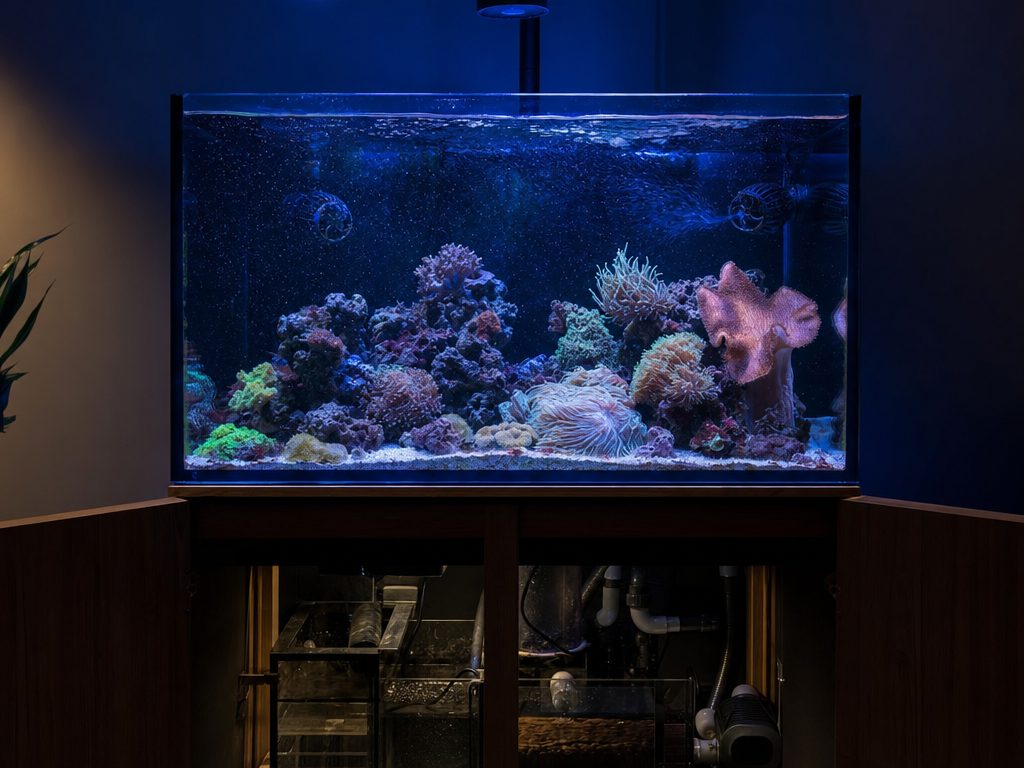
Flow is part of life support. Still water lets waste settle, oxygen drop, and heat build up in pockets.
Good flow keeps waste moving until the filter catches it, instead of settling in corners.
Oxygen enters at the surface. A steady ripple across the top lets gases trade in and out.
Flow spreads heater warmth, top-off water, and additives so the whole tank stays the same.
Corals rely on moving water to bring food, carry waste away, and keep sediment off their tissue.
A return pump runs the filtration loop. Powerheads and wavemakers move water around inside the display.
Pushes filtered water from the sump up to the display. Size it to the overflow and to the height it has to pump.
Shop pumpsA submersible pump that moves water around rock, sand, and livestock. It does not filter anything.
Shop wave makersA controllable pump, or a controller for pumps, that varies speed and pulses. Changing flow reaches more surfaces than one steady stream.
In most freshwater tanks the filter return provides the flow. A spray bar or air-driven sponge filter softens it for gentle fish.
Shop air equipmentTurnover is how many times per hour your pumps move the tank's volume. Rockwork, placement, and livestock change what the water actually does, so treat these as starting points.
Bettas, fancy goldfish, and other long-finned fish tire in strong current. Use a gentle filter, soften the output, and leave calm resting areas.
A filter rated around 4-6 times the tank volume suits most freshwater tanks. Plants should sway gently, not get flattened.
A powerhead or two plus the filter or return usually gives marine fish steady circulation and good oxygen.
Mostly from powerheads. Many soft corals and LPS prefer the gentler end and many SPS the stronger end; watch how each coral responds.
The return only runs the filtration loop. Match it to what your overflow and skimmer can handle at your real head height.
Where a pump sits, and what it pushes against, matter as much as the number on the box.
Return pump ratings are usually at zero height. Lift, elbows, valves, and long runs all cut real flow.
Watch where food and debris settle. Those spots need more movement.
Aim a return or powerhead to keep the surface moving. Add an air stone in freshwater if fish gasp.
When a return pump stops, water can siphon back down the return line into the sump.
Pumps slow down gradually, so a drop in flow is easy to miss until the tank shows it.
Check that every pump runs, the surface moves, and intakes are not clogged with debris or algae.
Unplug, remove the impeller, and clean the housing. If the manufacturer allows it, soak off mineral buildup in diluted vinegar or citric acid, then rinse well.
If corals stop swaying or debris starts settling, a pump may be clogged or worn. Clean it before buying another.
Grinding, rattling, or new vibration often means a worn impeller, a loose mount, or debris inside.
Most flow problems come from too much in one place and too little everywhere else.
Tissue can recede or polyps stay closed. Aim flow past corals so it moves them gently.
Coral not openingFish may gasp at the top, especially in warm water. Add ripple or an air stone.
Fish gasping guideIf the pump outruns the overflow, the display can flood. Size the return to the overflow, or turn it down.