Water garden
Beginner
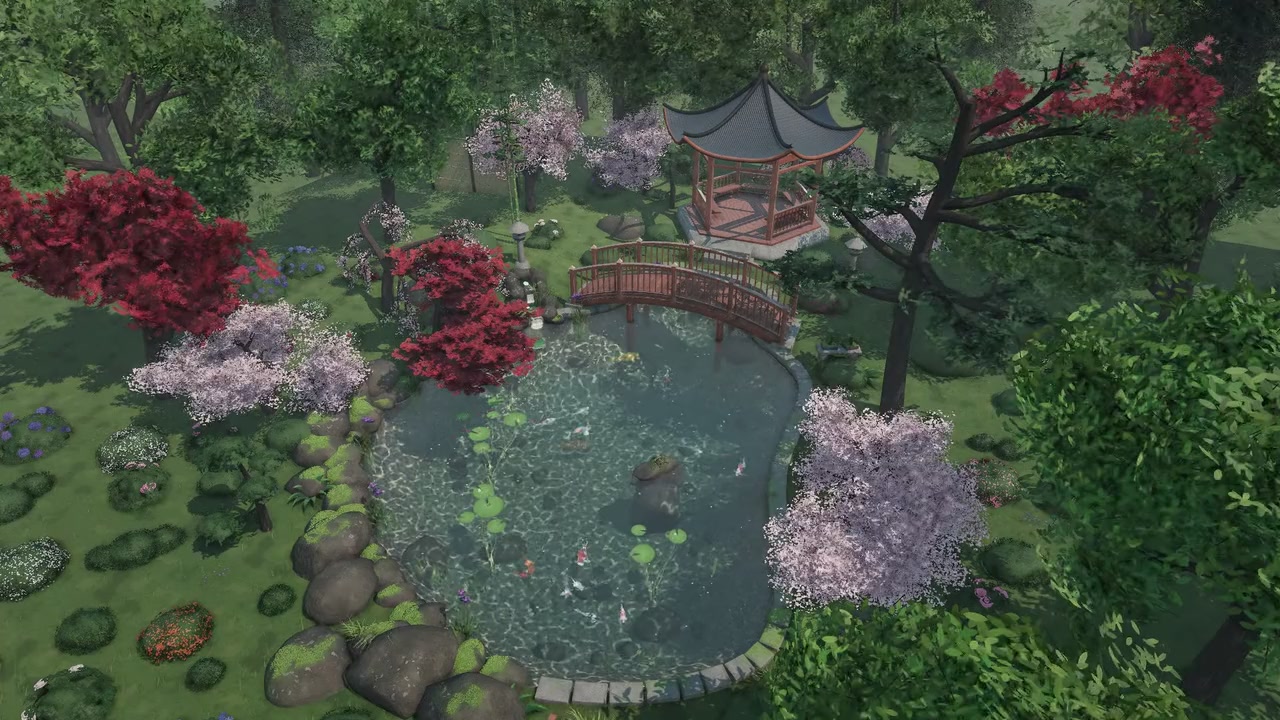
Plants come first: water lilies, marginals and floating plants, with a few goldfish.
- Good for
- Gardeners who want flowers, color and a little life in the water.
- Keep in mind
- Cover roughly half the surface with plants to shade the water and help keep algae in check.
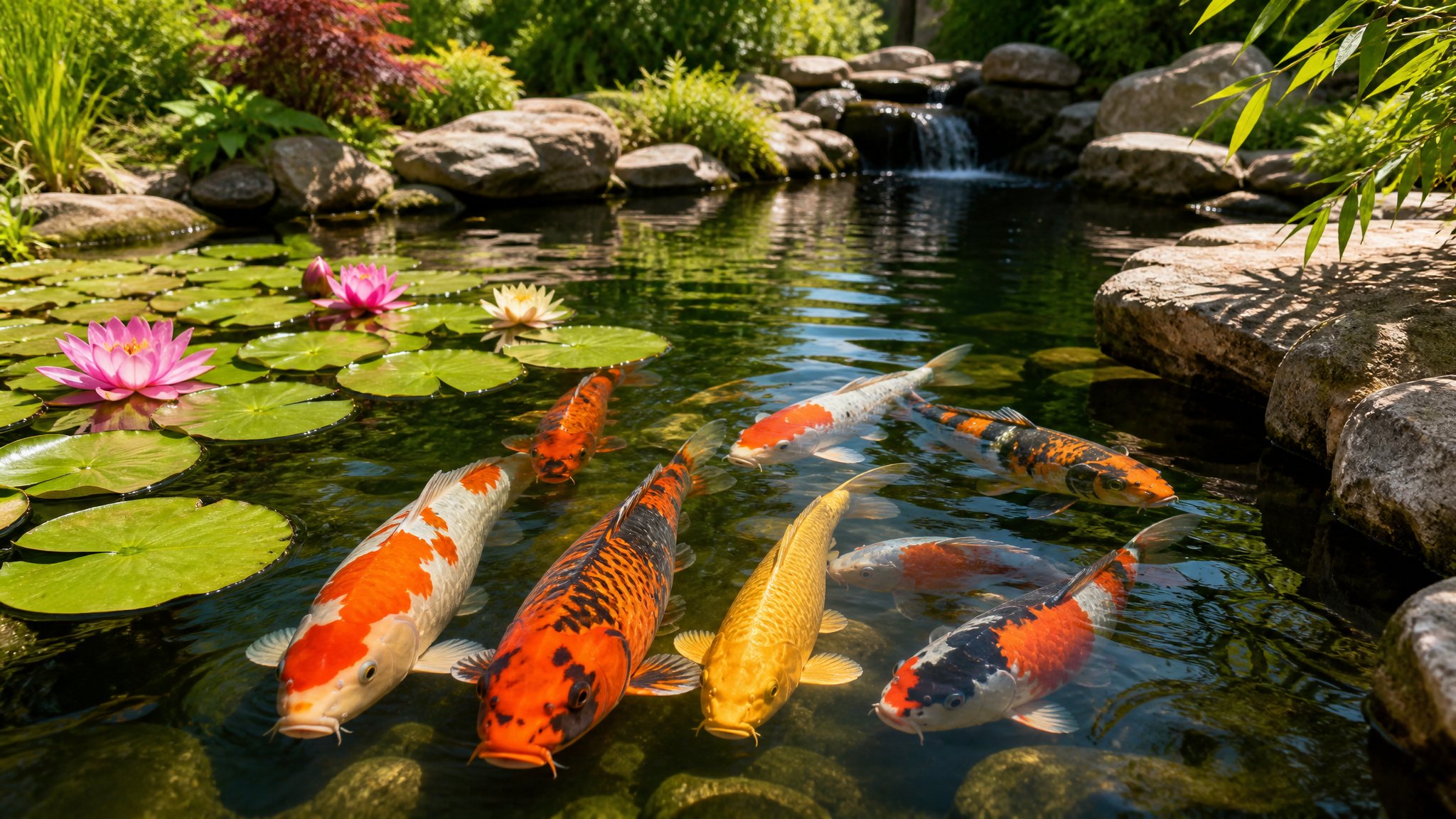
Koi pond
Intermediate
A deeper, larger pond built around koi, with strong mechanical and biological filtration.
- Good for
- Keepers who want big, long-lived, friendly fish.
- Keep in mind
- Koi grow large and eat plants, so plan for depth, volume, a UV clarifier and protected planting shelves.
Wildlife pond
Beginner
A natural pond with native plants and gently sloped edges for frogs, birds and insects.
- Good for
- Low-maintenance gardens and supporting local wildlife.
- Keep in mind
- Fish eat tadpoles and insect larvae, so many wildlife ponds keep few or no fish.
Pondless waterfall
Beginner
Water tumbles down a stream or waterfall into a hidden, rock-filled basin, then recirculates.
- Good for
- The sound of moving water where open water is not practical or safe.
- Keep in mind
- No fish or water lilies, but very little upkeep and no open water for small children.
Formal and raised pond
Intermediate
Geometric shapes and raised walls that suit patios and modern gardens.
- Good for
- Seeing fish up close at seating height.
- Keep in mind
- Raised walls expose more water to the cold, so it freezes sooner, and the walls must be built to hold the weight of the water.
Patio and container pond
Beginner
A watertight pot, half barrel or small tub with a fountain pump and a few plants.
- Good for
- Decks, patios and small yards.
- Keep in mind
- Small volumes heat up and freeze quickly, so plan to bring plants in or empty the container for winter.