The Hidden Reef home

Saltwater

Saltwater & reef aquariums

Marine tanks bring the color of the ocean home, from hardy fish-only systems to full coral reefs. They reward patience and stable water more than anything else.

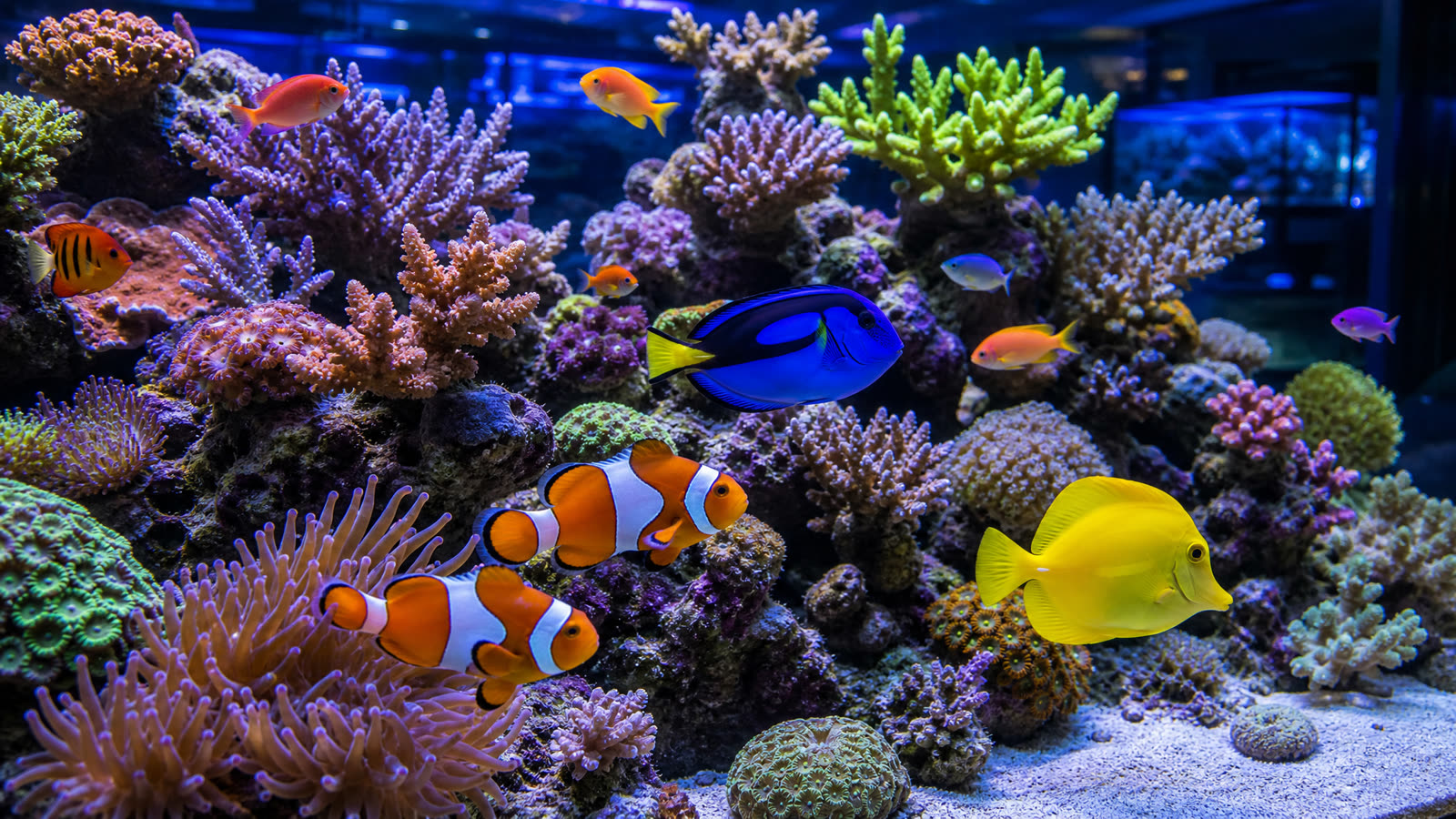
A colorful reef aquarium with corals and marine fish
Salinity 1.025–1.026

Specific gravity for most reef tanks (about 35 ppt), measured with a refractometer.

Temperature 76–79°F

Steady matters more than exact. Avoid daily swings of more than a degree or two.

Water source RO/DI

Mix salt with purified reverse-osmosis water. Tap water can carry phosphate, nitrate and metals.

Before the first fish 4–8 weeks

Time to cycle the tank and let it mature. Corals usually follow once the tank has been stable for a while.

Choose a style

Types of saltwater aquariums

Saltwater tanks range from fish-only systems to demanding coral reefs. Start with the corals and fish you want and the time you can give it.

Fish only with live rock

Beginner

Marine fish with live rock handling much of the biological filtration, without the demands of corals. Often called FOWLR.

Good for
Clownfish, tangs, wrasses, angelfish and other fish that may not be reef-safe.
Keep in mind
Plan around the adult size of the fish. Some popular marine fish need very large tanks.

Soft coral reef

Beginner

Mushrooms, leathers, zoanthids and other forgiving corals alongside reef-safe fish.

Good for
A first reef with moderate lighting.
Keep in mind
Soft corals still need stable salinity and temperature, and some release chemicals that bother nearby corals, so give them space.

LPS reef

Intermediate

Large-polyp stony corals like hammers, torches and brains, with big fleshy polyps and lots of movement.

Good for
Reefers ready to test and dose regularly.
Keep in mind
They build skeletons, so calcium, alkalinity and magnesium have to stay steady. Some have long sweeper tentacles that sting neighbors.

SPS reef

Advanced

Small-polyp stony corals such as Acropora and Montipora, prized for intense color and fast growth.

Good for
Experienced keepers with a mature, very stable system.
Keep in mind
Needs strong lighting, high flow, low nutrients and tight control of water chemistry, often with automated dosing.

Nano and all-in-one

Beginner

Compact tanks, often 10–30 gallons, with filtration, pump and heater hidden in a rear chamber.

Good for
Small spaces and a tidy first saltwater system.
Keep in mind
Small volumes swing faster in temperature and salinity, so an automatic top-off and regular testing help a lot.

Sump-based system

Intermediate

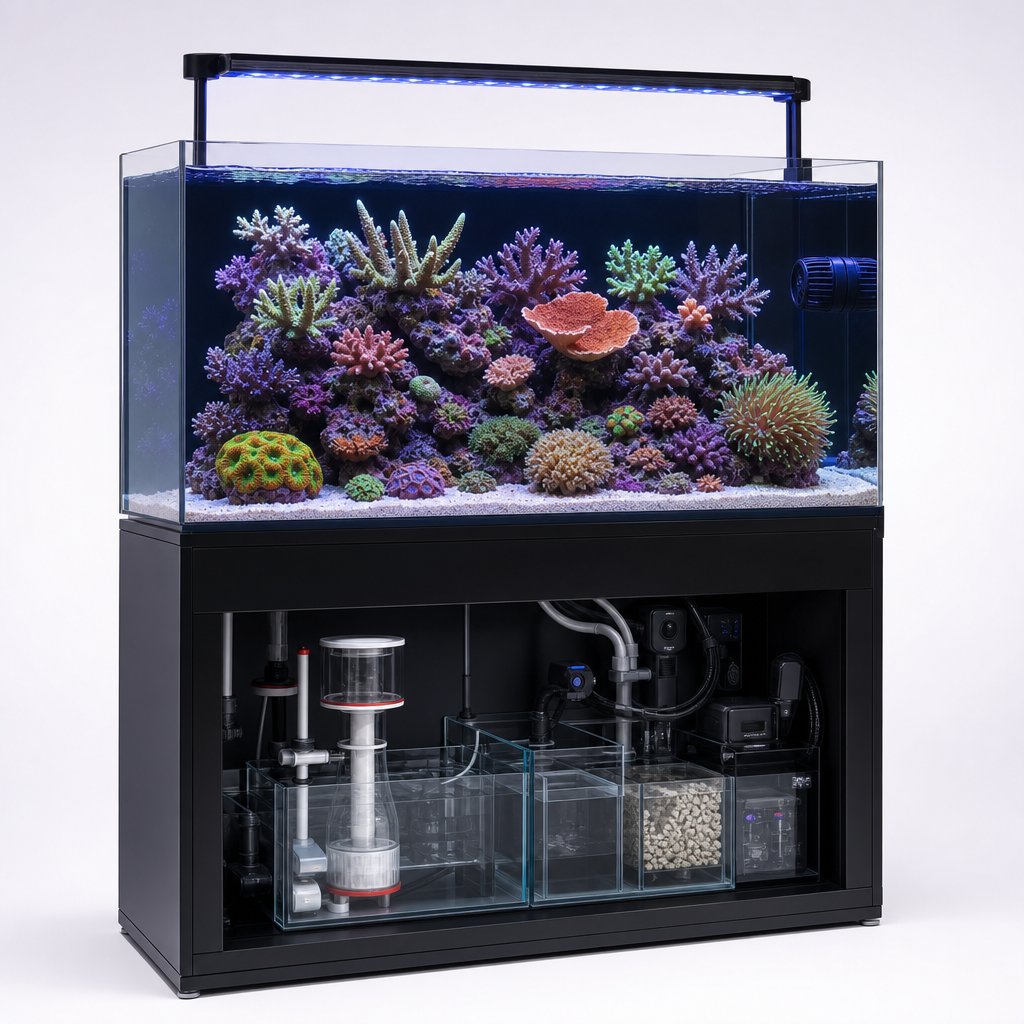
A display tank plumbed to a second tank below, the sump, which holds the skimmer, heaters and other equipment.

Good for
Larger reefs, and anyone who wants equipment out of sight and more total water.
Keep in mind
Needs an overflow or drilled tank and a return pump sized for the system.
Step by step

How to get started

These are general guidelines. Needs vary by species, so check the specific fish and corals you plan to keep.

  1. Decide: fish only or reef

    This one choice drives your lighting, flow, filtration and budget. A fish-only tank or a soft coral reef is a gentle place to start.

  2. Plan the system

    Choose an all-in-one tank or a display with a sump, then plan heating, water movement with powerheads, lighting suited to your corals, and a protein skimmer for most reef tanks.

  3. Make good saltwater

    Mix reef salt into RO/DI water to a specific gravity of 1.025–1.026 and check it with a refractometer. Top off evaporation with fresh RO/DI water only: salt stays behind when water evaporates.

  4. Build the rockwork and cycle

    Stack rock into a stable structure with open space for water to flow, add sand, then cycle with an ammonia source and bottled bacteria. A brief algae "ugly phase" afterward is completely normal.

  5. Add a cleanup crew, then fish

    Start with snails and hermit crabs, then add hardy fish slowly. Quarantining new fish before they join the display prevents many common diseases.

  6. Add corals once things are stable

    Begin with soft corals. Test alkalinity, calcium, magnesium and nitrate on a schedule and keep a log so you can spot changes early.

See how it works

Explore in 3D

Keep learning

Helpful guides

Ready when you are

When you are ready to pick out supplies, everything we carry is in one place. Questions first? Call (215) 269-4930 or visit us at 4501 New Falls Rd, Levittown.