The Hidden Reef home

Terrariums

Terrariums & reptile habitats

A good terrarium recreates a small slice of desert, rainforest or riverbank, with the heat, light and humidity the animal living there needs. Start with the animal, then build its world.

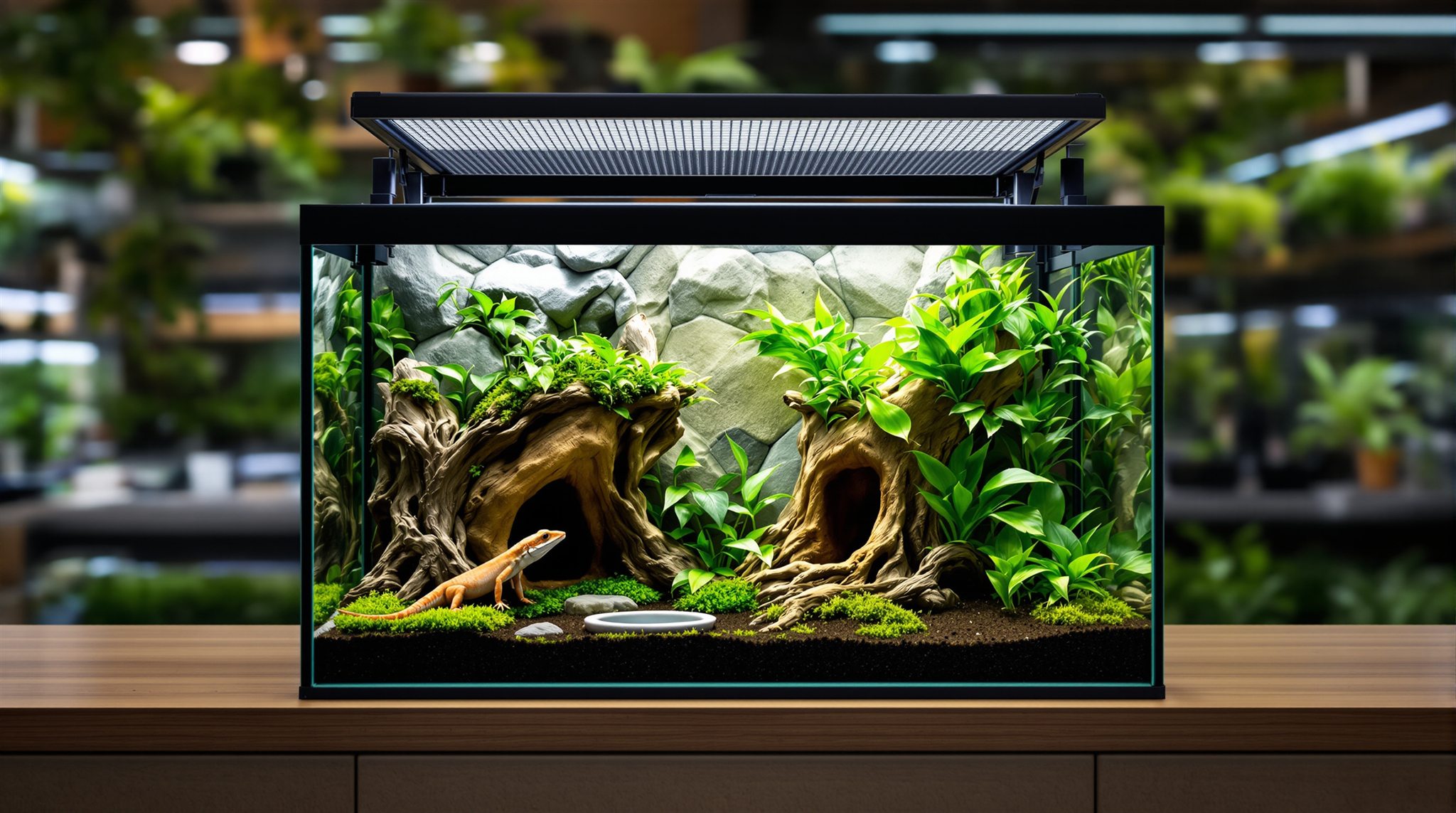
A planted reptile terrarium with driftwood hides, a stone background and a lizard
Heat Warm and cool sides

A temperature gradient lets reptiles move between a basking spot and a cooler retreat.

Light UVB for most

Most daytime reptiles need UVB to use calcium. Replace UVB bulbs on schedule, often every 6–12 months, because output fades before you can see it.

Humidity 30–80%

From dry desert setups to humid rainforest tanks. Match it to your species.

Measure it At both ends

Use a thermometer on each side and a hygrometer, and run heat sources through a thermostat.

Choose a style

Types of terrariums

The right habitat depends on where your animal comes from. These are the setups most keepers start with.

Desert and arid

Beginner

Dry setups with a hot basking area, rocks and hides.

Good for
Bearded dragons, leopard geckos and many desert species.
Keep in mind
Basking temperatures run high for some species, so a thermostat and accurate thermometers matter.

Tropical and rainforest

Intermediate

Humid, planted habitats with climbing branches and regular misting.

Good for
Crested geckos, tree frogs, day geckos and other tropical species.
Keep in mind
Needs ventilation as well as humidity, or the enclosure can grow mold.

Bioactive

Intermediate

A living substrate with plants and a cleanup crew of springtails and isopods that break down waste.

Good for
Keepers who want a natural look and less routine cleaning.
Keep in mind
Takes longer to set up and establish, and the substrate and plants must suit your animal.

Paludarium

Advanced

Part land, part water, often with a stream or waterfall.

Good for
Newts, some frogs, crabs and plants that like wet roots.
Keep in mind
The water section needs its own filtration, and the build must be completely watertight.

Aquatic turtle habitat

Intermediate

Mostly water, with a dry basking dock under heat and UVB.

Good for
Musk turtles, sliders, painted turtles and other aquatic species.
Keep in mind
Turtles are messy and grow large, so plan for a big tank and a filter rated well above its volume.

Planted terrarium

Beginner

A glass garden of mosses, ferns and small tropical plants, with no animals at all.

Good for
Desks and shelves, or a relaxed first project.
Keep in mind
Closed terrariums want bright, indirect light; direct sun can overheat the plants inside.
Step by step

How to get started

These are general guidelines. Needs vary by species, so check the specific animals you plan to keep.

  1. Choose the animal first

    Learn its adult size, diet, lifespan, and the temperatures and humidity it needs. Everything else follows from that.

  2. Pick the right enclosure

    Size it for the adult animal. Front-opening glass terrariums make feeding and cleaning easier, and a secure, locking screen top keeps escape artists in.

  3. Set up heat and light

    Add a basking lamp or other heat source on a thermostat and, for most daytime reptiles, a UVB fixture. Put lights on a timer for a steady day and night.

  4. Furnish the habitat

    Use a substrate suited to the species, give hides on both the warm and cool sides, and add branches to climb, a water dish and plants.

  5. Test before moving in

    Run everything for a few days and check the temperature and humidity at both ends before your animal arrives.

  6. Settle in and keep a routine

    Keep handling light for the first week or two. Spot-clean daily, refresh the water, dust feeder insects with calcium as needed, and replace UVB bulbs on schedule.

See how it works

Explore in 3D

Keep learning

Questions?

Our help guides focus on aquariums and ponds today. For terrarium questions, call or stop by the store.

Ready when you are

When you are ready to pick out supplies, everything we carry is in one place. Questions first? Call (215) 269-4930 or visit us at 4501 New Falls Rd, Levittown.