Rinse in tank water
Rinse media in water you removed from the tank. Chlorine, chloramine, and temperature shock from tap water can kill the bacteria.
Your filter holds most of the bacteria that keep the water safe. Clean it to restore flow, not to make it look new: rinse in old tank water, keep the bio media, and restart it properly.
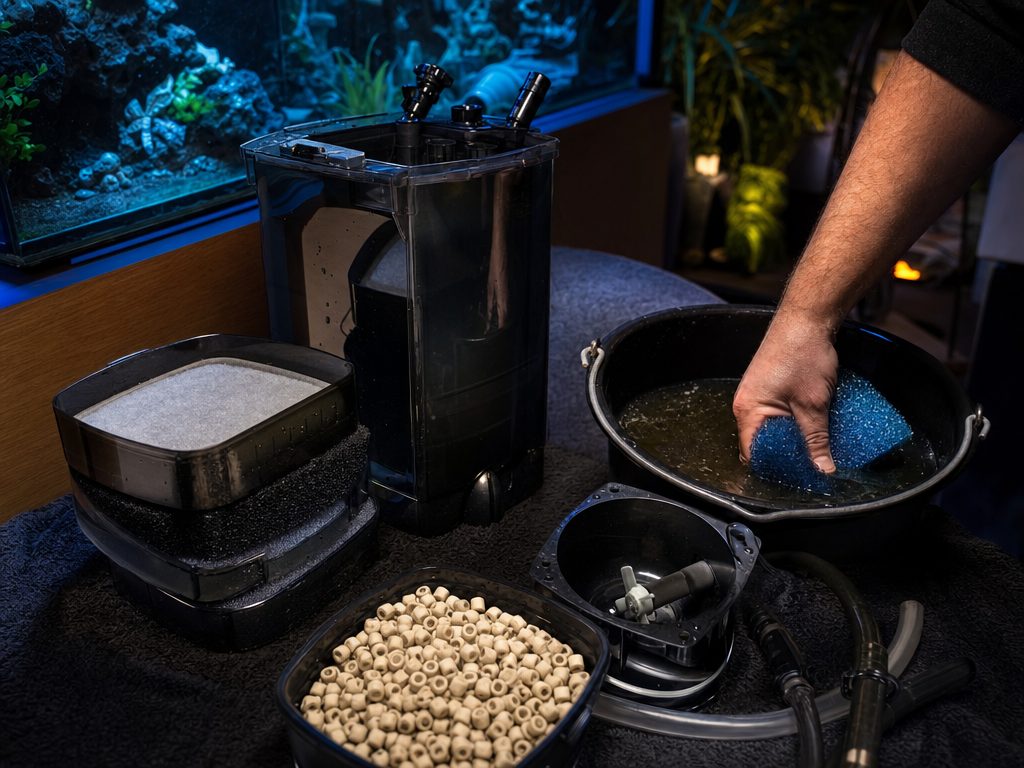
A brown, dirty-looking sponge is normal. The goal is good flow with the bacteria still in place.
Rinse media in water you removed from the tank. Chlorine, chloramine, and temperature shock from tap water can kill the bacteria.
Swap no more than about half of the media at once. Wait a few weeks before replacing the rest.
Clean when flow slows down, not when the media looks dirty. Squeeze and swish, do not scrub it white.
Keep bio media in tank water while you work. Media that dries out or sits in a switched-off filter for hours loses bacteria.
Plan filter cleaning for a water change day so you have removed tank water ready.
Siphon a few gallons into an aquarium-only bucket before you open the filter.
Cheap tools make the parts you cannot reach easy to clean.
Fine floss and chemical media wear out. Biological media rarely needs replacing.
Every tank is different. Let flow tell you when it is time.
Always unplug the filter first. Check your filter's manual for parts that are specific to your model.
Lift out the cartridge or sponge and rinse it in the bucket.
Close the valves if it has them, disconnect, and carry it upright to a tub or towel.
Turn off the air pump and slide the sponge off.
Gunk on the impeller and slime in the tubing slowly choke flow.
Most pumps should not run dry. Get water in before you plug it back in.
Fill a hang-on-back box with tank water. Prime a canister with its primer or by filling it, as the manual says.
Gurgling and sputtering mean trapped air. Gently rock a canister or top off a hang-on-back box until flow is steady.
Check hoses, valves, and the lid over the next hour. Listen for rattling that may mean a worn impeller.
After a big cleaning, check ammonia and nitrite. Any reading above zero means the bacteria were set back.
Most filter crashes happen right after a cleaning that was too thorough.
It looks cleaner, but it can wipe out the bacteria and start a new ammonia spike.
Never use soap, bleach, or household cleaners on anything that goes in the tank. Hot water kills the bacteria too.
Do not deep clean the filter, vacuum all the gravel, and replace media on the same day.
Water in a filter left off for hours goes stale. Rinse the media in tank water before restarting it.