Holds a set point
The heater switches on when the water drops below its setting and off when it gets there. It can add heat, but it cannot cool, and steady matters more than the exact number.
A heater's real job is to keep the water steady. Size it for how cold the room gets, put it where water moves, and check it with a separate thermometer. Most tropical tanks do well somewhere around 76-80°F.
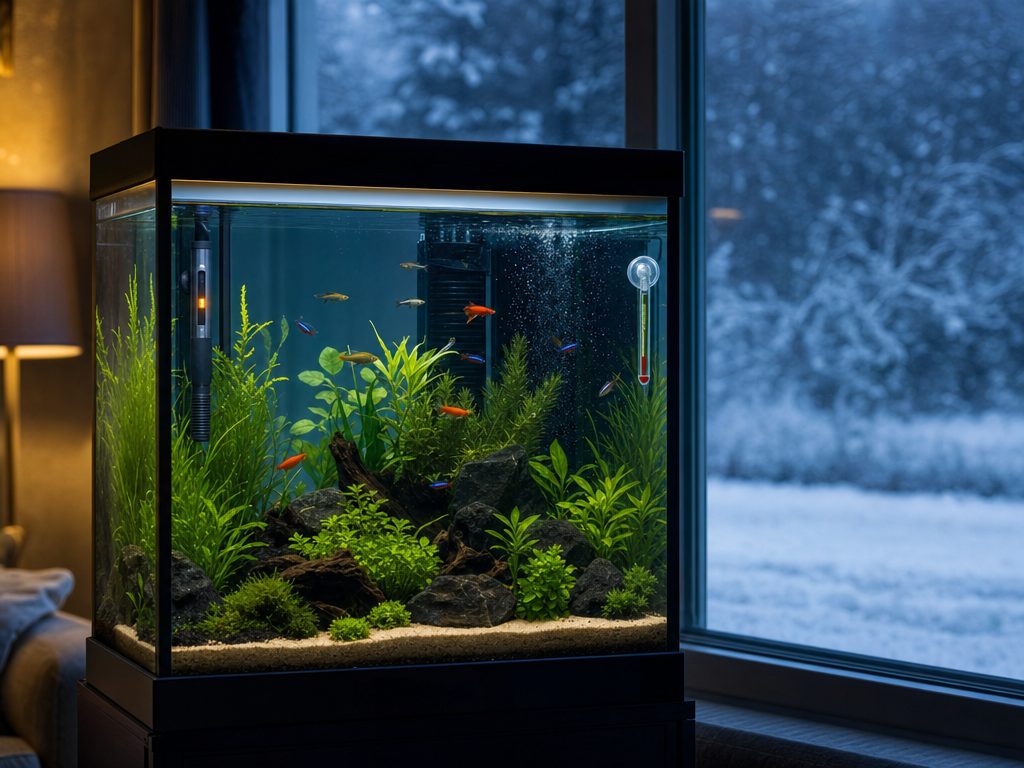
The heater only has to cover the difference between your room and your target temperature. That gap decides the size.
The heater switches on when the water drops below its setting and off when it gets there. It can add heat, but it cannot cool, and steady matters more than the exact number.
Most tropical freshwater and reef tanks sit around 76-80°F. Check the range for the fish you keep.
The colder the room, the more heat the tank loses and the harder the heater has to work.
Lights, pumps, and a hot room can push a tank above target. A bigger heater will not fix that.
Use the low end in a warm, steady room and the high end in a cold one. This is only a starting point; check the manufacturer's sizing chart for your heater.
Small tanks lose heat quickly for their size, so lean toward the top of the range if the room gets cool.
One heater usually covers this size. Go larger if the tank sits near a window, an outside wall, or a cold floor.
Many keepers split this total between two smaller heaters for more even heat and a safety margin.
A 75-gallon works out to about 225-375 watts. Two 150-watt heaters instead of one 300-watt heater is a common split.
Garages and unheated basements can need more than 5 watts per gallon. Pair extra wattage with a temperature controller.
Shop controllersA well-sized heater in a dead corner still heats unevenly. Put it where the current spreads the warmth.
On tanks around 55 gallons and up, two smaller heaters are often safer than one big one.
Near the filter outflow or intake, or in a sump's return chamber, flow carries heat around the tank.
Let a new heater sit in the water before plugging it in. Many instructions say 15-30 minutes.
A guard keeps fish from resting against a hot heater and protects the heater from bumps.
Heater dials can be off by a few degrees. Check what the water is actually doing and protect the tank from a heater that fails.
Place a separate thermometer away from the heater so it shows what the fish feel.
A temperature controller uses its own probe to cut power if the water gets too warm, which protects against a heater stuck on.
Give heaters a quick look during regular maintenance.
A heater running in air can overheat and crack, or shatter when water hits it again.
Most heater problems come from placement, trust in the dial, or water changes.
Unplug first. A heater exposed to air can crack, and glass heaters can shatter when cool water hits them.
Without flow, it warms one corner and shuts off early. Move it into the filter or return current.
Read about flowChange temperature slowly, about 1-2°F a day at most. Ask before raising heat to treat disease.
Parasites and ich