Ammonia or nitrite
New tanks, overfeeding, a dead fish, or an over-cleaned filter can cause spikes that damage fins and gills.
Ragged fins usually come from an injury, like nipping or snags, or from fin rot, a bacterial infection that takes hold when water quality slips or fish are stressed. Test the water first. Clean, stable water heals most fins without medication.
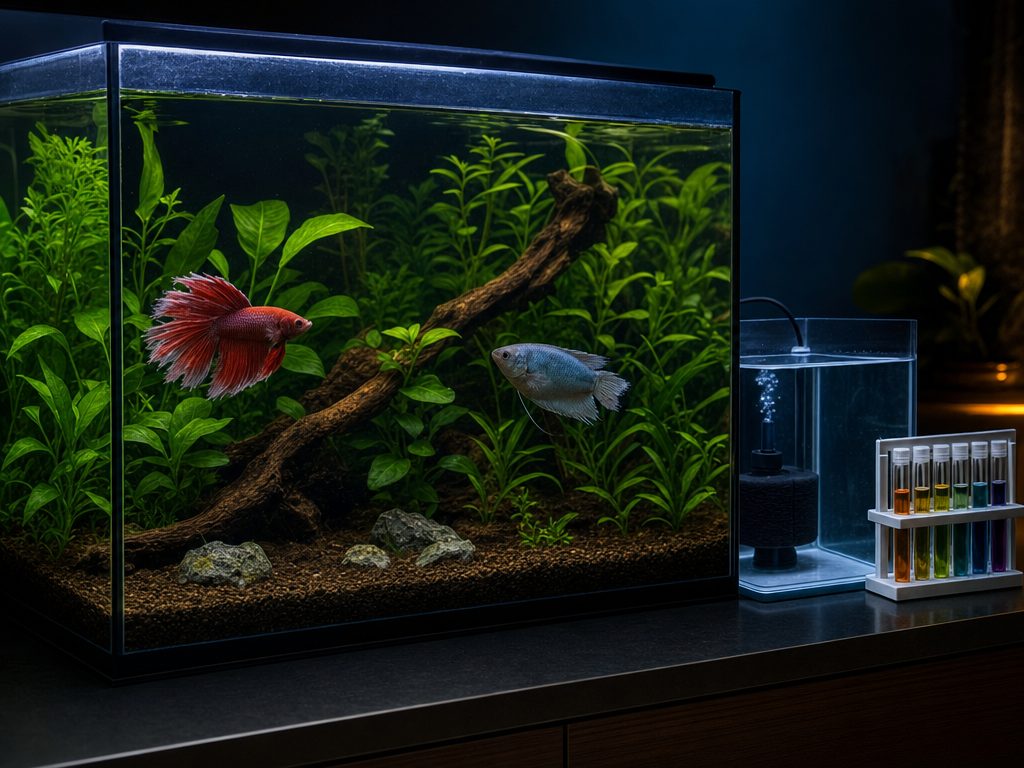
The fin edge tells you a lot. Take a photo so you can compare tomorrow.
A torn fin from an injury usually has a clean split or bite-shaped notch with a normal-colored edge that is not spreading. Most heal on their own in clean water.
Saltwater fish get ragged fins too, most often from aggression or poor water. Treat them in a separate tank, since many medications harm corals and invertebrates.
Fin rot almost always follows a problem in the tank. Find it, or fins keep breaking down.
Fin rot bacteria live in almost every tank. Stress and dirty water let them win.
New tanks, overfeeding, a dead fish, or an over-cleaned filter can cause spikes that damage fins and gills.
Nitrate and waste build up slowly. Fish look fine for weeks, then fins start to fray.
Some barbs, tetras, and territorial fish target long fins. In saltwater, aggression is the top cause of torn fins.
Rough rock, stiff plastic plants, nets, and open intakes tear fins, and torn edges can get infected.
Shipping, crowding, and unstable temperature weaken fish so small injuries do not heal.
Parasites or wounds can leave fins open to a secondary infection. Look for other symptoms too.
Most mild cases improve within a week or two once the water is right.
Write the numbers down. If ammonia or nitrite is above zero, see the ammonia or nitrite guide.
Change about 25% with dechlorinated, temperature-matched water. Repeat over the next few days if ammonia or nitrite is up.
Vacuum part of the gravel, remove leftover food, and rinse the filter sponge in old tank water, not tap water.
Move the bully or the injured fish, swap rough decor for smooth pieces, and cover intakes with a sponge.
Compare photos each day. A clear edge of new growth means healing. Full regrowth can take weeks.
If rot advances after several days of clean water, use an antibacterial treatment labeled for fin rot, in a hospital tank when possible. Remove carbon, follow the label exactly, and keep aeration high.
Rushed treatment does more harm than a few days of clean water.
Start with testing and water changes. Treatment comes second.
Ammonia, nitrite, nitrate, and pH show whether water is behind the damage.
View testingEasy, regular water changes treat mild fin rot and help prevent it.
Shop maintenanceConditioner for every water change. Pick a freshwater or saltwater antibacterial only after the water is fixed.
View additivesA lid, heater, and sponge filter make treatment safer for the fish and the display.
View aquariumsGentle filtration for a hospital tank and extra oxygen while medicating.
View air equipmentA correctly sized heater keeps temperature steady so fish can heal.
View heatingCall or come in if rot reaches the body, you see red streaks or cotton-like patches, several fish are affected, or a fish stops eating. Bring a fresh water sample with your tank size, livestock list, and recent changes, plus a clear photo or short video.
Call (215) 269-4930 Visit the store