Catch problems first
Ich, fin rot, and other problems often show up in the first couple of weeks after a move. You see them in a small tank, not in your display.
New fish can carry parasites or disease that take days to show. A simple quarantine tank and a few compatibility checks protect the animals you already have.
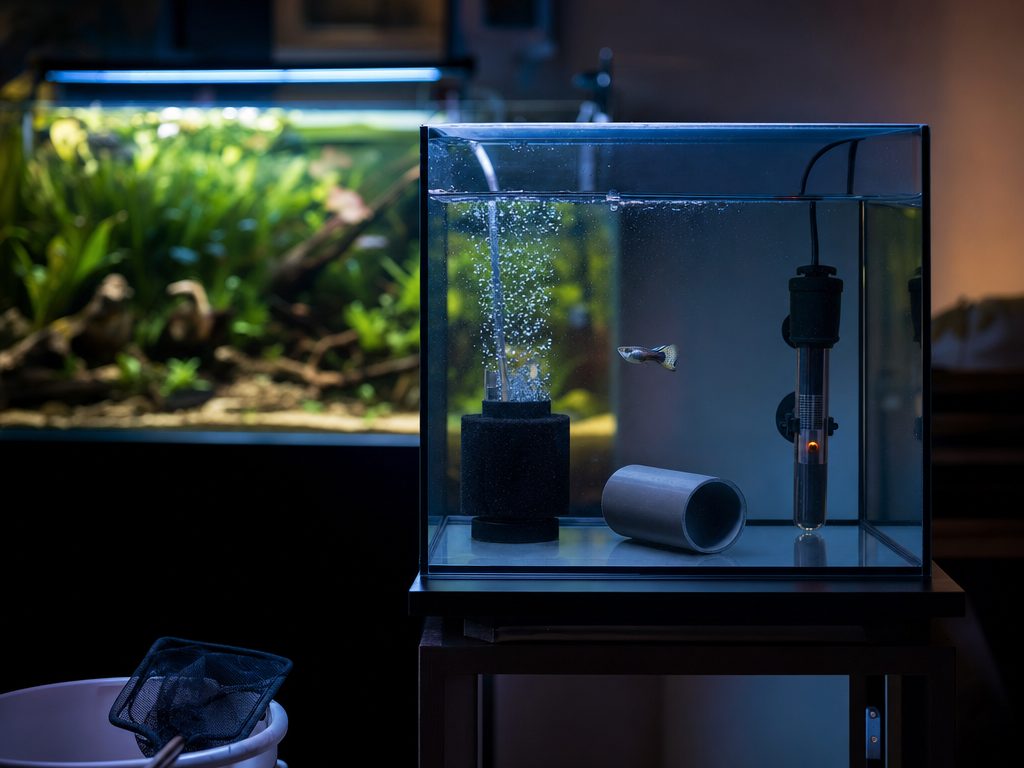
One sick new fish can spread a problem to the whole display. A few weeks in a separate tank is cheap insurance.
Ich, fin rot, and other problems often show up in the first couple of weeks after a move. You see them in a small tank, not in your display.
Treating a small tank takes less medication and keeps it away from your display, plants, and filter.
New fish settle in and start eating without competing with established, territorial tankmates.
Many treatments harm shrimp, snails, live plants, or coral. Quarantine lets you treat fish without exposing them.
It does not need to look nice. It needs to be stable, easy to clean, and easy to see into.
A 10 to 20 gallon tank works for most small fish. Larger fish need a bigger tank.
A sponge filter on an air pump is gentle, cheap, and easy to keep ready.
Hold the quarantine tank at the same temperature as your display so the final move is easy.
PVC pipe or a plastic plant gives cover without soaking up treatments the way rock and gravel can.
Plan on about 2 to 4 weeks in quarantine. Many saltwater keepers quarantine longer.
Float the closed bag for about 15 minutes to match temperature. Then add a little tank water to the bag every few minutes for 15 to 30 minutes.
Check each fish closely at feeding time. Note anything new.
If a problem shows up, identify it before you treat. Use a treatment made for that problem and follow the label.
Move fish only after they have eaten well and looked healthy for the whole quarantine period.
Quarantine cannot fix a fish that does not fit your tank. Check these four things before every purchase.
Most fish are sold young. Look up the size they reach, not the size in the store.
Mix fish with similar temperaments and swimming speeds.
Tankmates should want the same temperature, pH range, and hardness.
Reef-safe means a fish is not expected to eat or nip coral and invertebrates. It is a guide, not a promise.
Most quarantine problems come from rushing or from a tank that was not ready.
A fresh tank with a new filter can spike ammonia. Keep a seeded sponge ready or test and change water often.
A few days is not enough. Some problems take a week or more to show.
A wet net moved from quarantine to the display can carry disease with it.
Mixing medications or treating the wrong problem adds stress. Identify the problem first and follow the label.