Quick wipes
One half sits inside, one outside. Match it to your tank material and glass thickness.
- Floating inner halves are easier to retrieve
- A magnet that is too strong is hard to steer
- Keep fingers clear as the halves snap together
A clear view takes a few minutes and the right tool for your tank. Learn how to use magnets, scrapers and pads without scratching, why to clean before a water change, and what fast regrowth is telling you.
Check this before you buy a cleaner. Glass tanks usually have silicone seams in the corners. Acrylic tanks usually have seamless corners and often a solid top with cut-outs.
Check the label or manual if you still have it. If you are not sure, treat the tank as acrylic until you know.
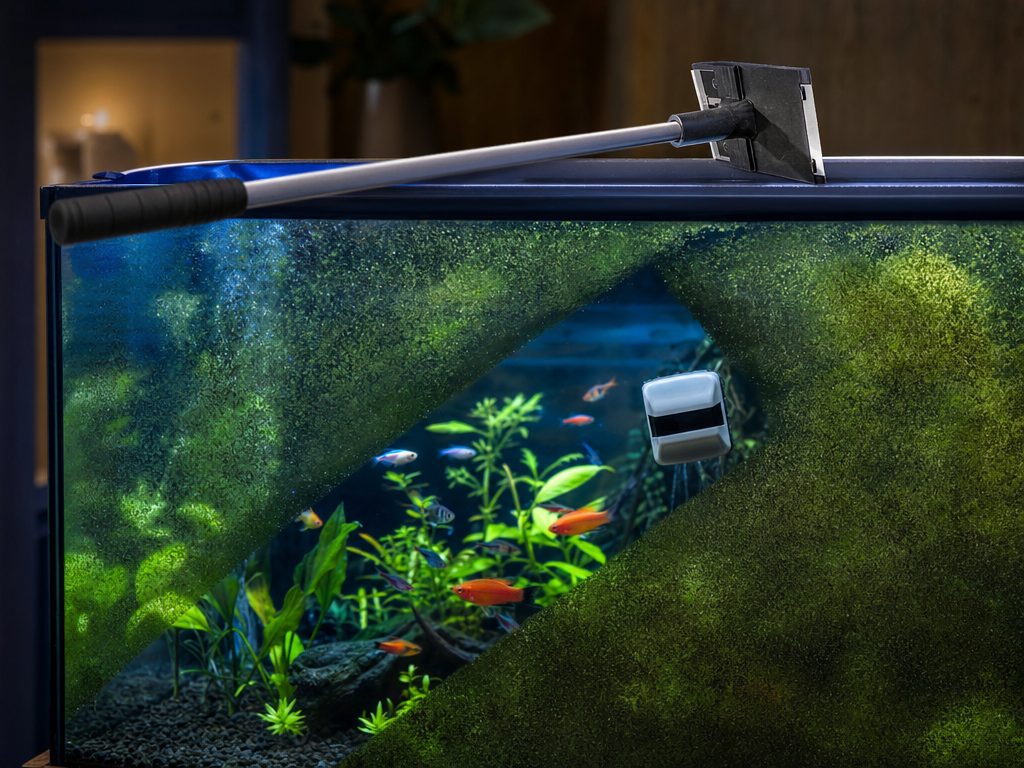
Most tanks need a magnet for quick wipes and a scraper for the spots it cannot shift.
One half sits inside, one outside. Match it to your tank material and glass thickness.
A long-handled scraper reaches the bottom without your arm in the water.
Use pads made for aquariums and labeled for your tank material.
Water and a clean cloth handle most smudges, drips and salt spray on the outside.
Light, regular cleaning is easier on the tank and the glass than a hard scrub once a month.
Loosened algae then gets siphoned out or caught by the filter instead of settling back.
One trapped grain can drag a long scratch across the panel.
Steady, overlapping passes work better than pressing hard.
Wrap up away from the water and look after your tools.
A little film every few days is normal. If the glass is green again in a day or two, the tank is telling you something.
Usually too much light, too many nutrients, or both.
Brown diatom film is common in new tanks and usually fades as the tank matures.
Slimy sheets are often cyanobacteria, not true algae. Scraping alone will not fix it.
Hard green spots and pink or purple coralline algae need a blade.
Most scratches come from sand, the wrong blade or too much pressure. Most chemical problems come from household products that drift into the water.