 New setup
Start a Tank
Step-by-step guidance for setting up a healthy, thriving aquarium.
Start herePractical care guides for choosing equipment, understanding water quality, and troubleshooting the problems you actually run into at home.
New setup
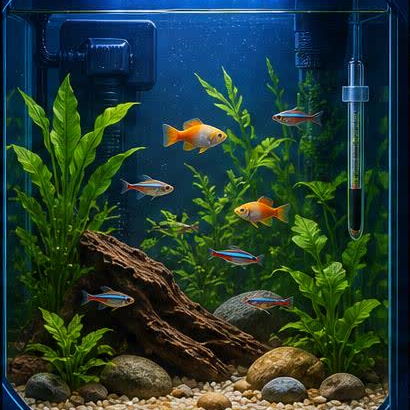
Step-by-step guidance for setting up a healthy, thriving aquarium.
Start here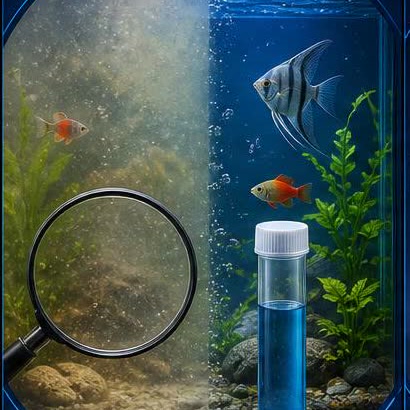 Diagnosis
Find solutions to common issues and get your tank back on track.
Start triage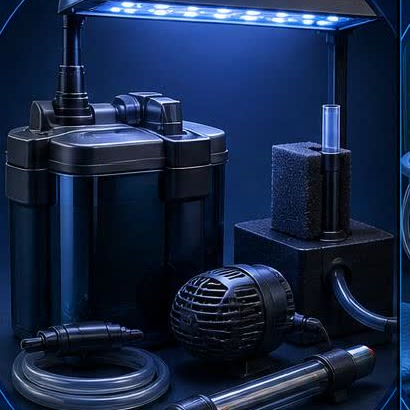 Gear help
Compare filters, pumps, heaters, lighting, and more to find what's right.
Explore gear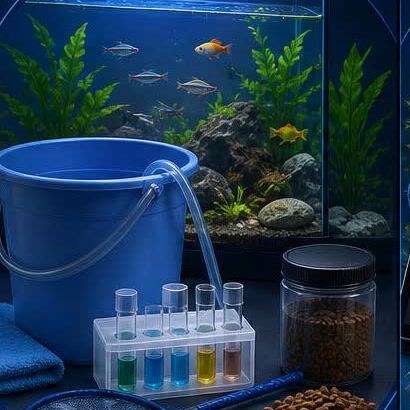 Routine care
Weekly routines, water changes, feeding, testing, and quarantine basics.
Feeding basics Library
Browse every guide and resource in one complete library.
Browse allStart with the symptom, then move to tests, likely causes, and the safest first action.
Most aquarium issues look similar at first. Water trouble, oxygen trouble, disease, overfeeding, light, and dirty filtration can overlap. The goal is to check the urgent basics before buying treatments.
Treat oxygen, ammonia, nitrite, temperature, and recent chemical additions as urgent.
Separate bacterial bloom, green-water algae, excess food, dirty substrate, and decay.
Check water first, then separate parasites, stress, injury, and treatment safety.
Look at light schedule, nutrient fuel, flow, filtration, and whether UV makes sense.
Increase surface movement, then test ammonia, nitrite, pH, and temperature before adding medication.
Good notes make the conversation faster and keep the first fix safer.
A healthy aquarium connects its living substrate, filtration, and testing routine.
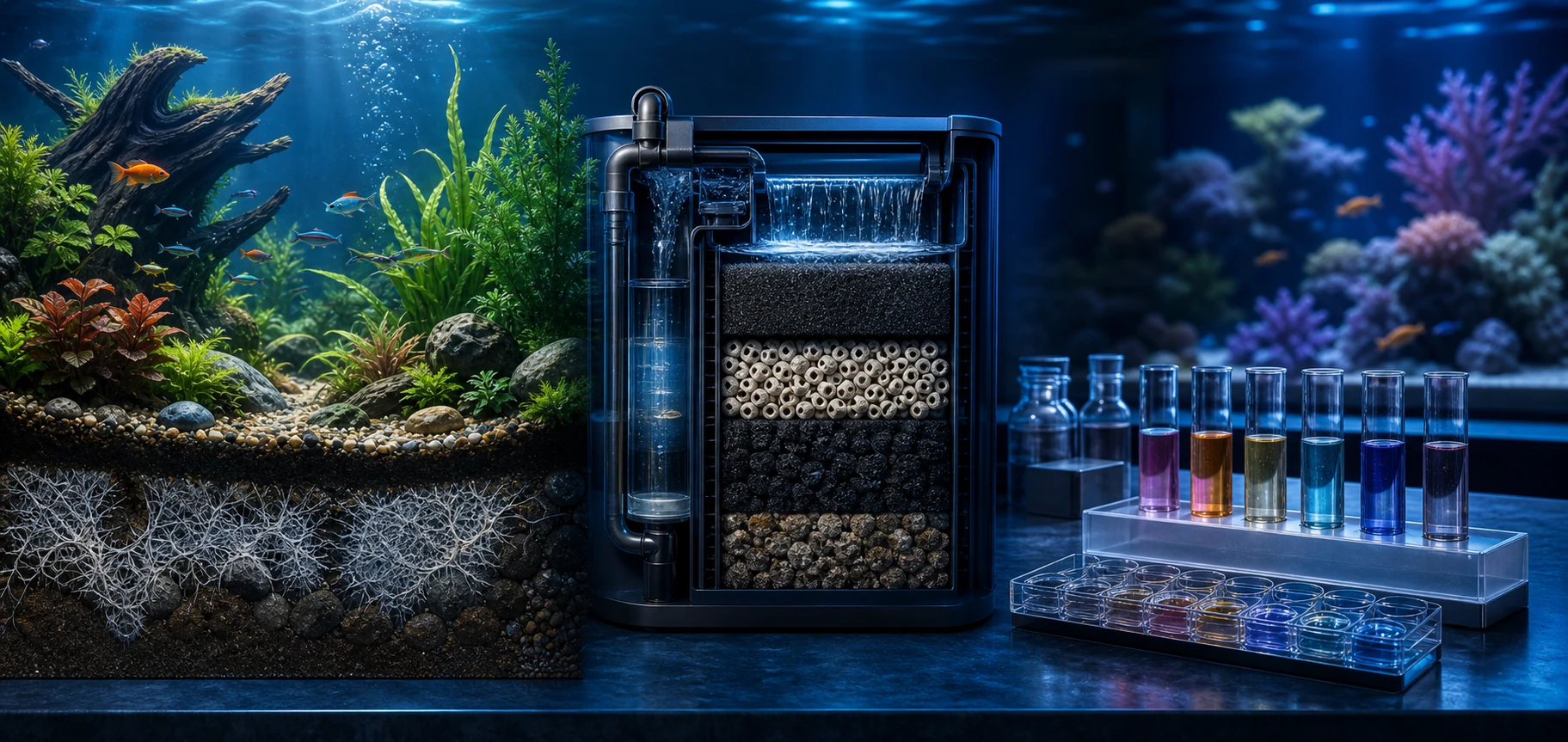
Beneficial bacteria change dangerous ammonia and nitrite into nitrate that maintenance can remove.
Understand the cycleFlow should carry debris and dissolved waste through mechanical, biological, and optional chemical media.
Choose a filterRecord results consistently so changes in ammonia, nitrate, pH, temperature, and salinity are easy to spot.
Build a testing rhythmExpand a category to see what's inside.
Choose the guide you need, then open the full page or supporting section.
The full beginner setup guide: first shopping trip, equipment, water prep, cycling, and first livestock.
Open guideStart with the core saltwater plan: prepared water or RO/DI, salinity tools, flow, rock, sand, and testing.
Open guideA simple weekly rhythm for testing, water changes, glass cleaning, filter checks, and catching problems early.
Open guidePortion size, food rotation, warning signs of overfeeding, and how to match food to the fish in the tank.
Open guideGrow the bacteria before the fish: fishless vs. fish-in cycling, weekly test readings, and how to know the tank is ready.
Open guideSet up a simple quarantine tank, acclimate new fish, and check adult size, temperament, water needs, and reef safety first.
Open guideHow much water to change and how often, siphon technique for gravel, sand, and planted tanks, and refilling safely.
Open guideClean hang-on-back, canister, and sponge filters without losing helpful bacteria, then prime and restart them safely.
Open guideClean glass or acrylic with magnets, scrapers and pads without scratching, and learn what fast algae regrowth is telling you.
Open guideWhat to check daily, test weekly and do monthly on a reef tank, plus safe water changes with matched, pre-mixed saltwater.
Open guideWhy alkalinity, calcium and magnesium drop, how to measure what your reef uses, and how to replace it slowly and safely.
Open guideOne consolidated filtration area for freshwater, planted displays, saltwater, reef systems, UV, reactors, skimmers, and sumps.
Compare HOB filters, sponge filters, canisters, sumps, all-in-one chambers, flow needs, and maintenance tradeoffs.
Open guideUnderstand sponge, floss, ceramic bio media, carbon, phosphate remover, and safe replacement habits.
Open guideRough watts-per-gallon sizing, room temperature, two-heater setups, placement, thermometers, controllers, and water-change safety.
Open guideLight needs for fish-only, planted, and reef tanks, plus photoperiod, timers, ramping, algae control, and acclimating corals.
Open guideTurnover rough guides, return pumps vs powerheads, dead spots, surface agitation, flow by livestock, and head height loss.
Open guideHow automatic fleece rollers work, how they compare to filter socks, sizing to your sump and flow, and routine maintenance.
Open guideClick a filtration system to open its diagram, use case, and maintenance notes.
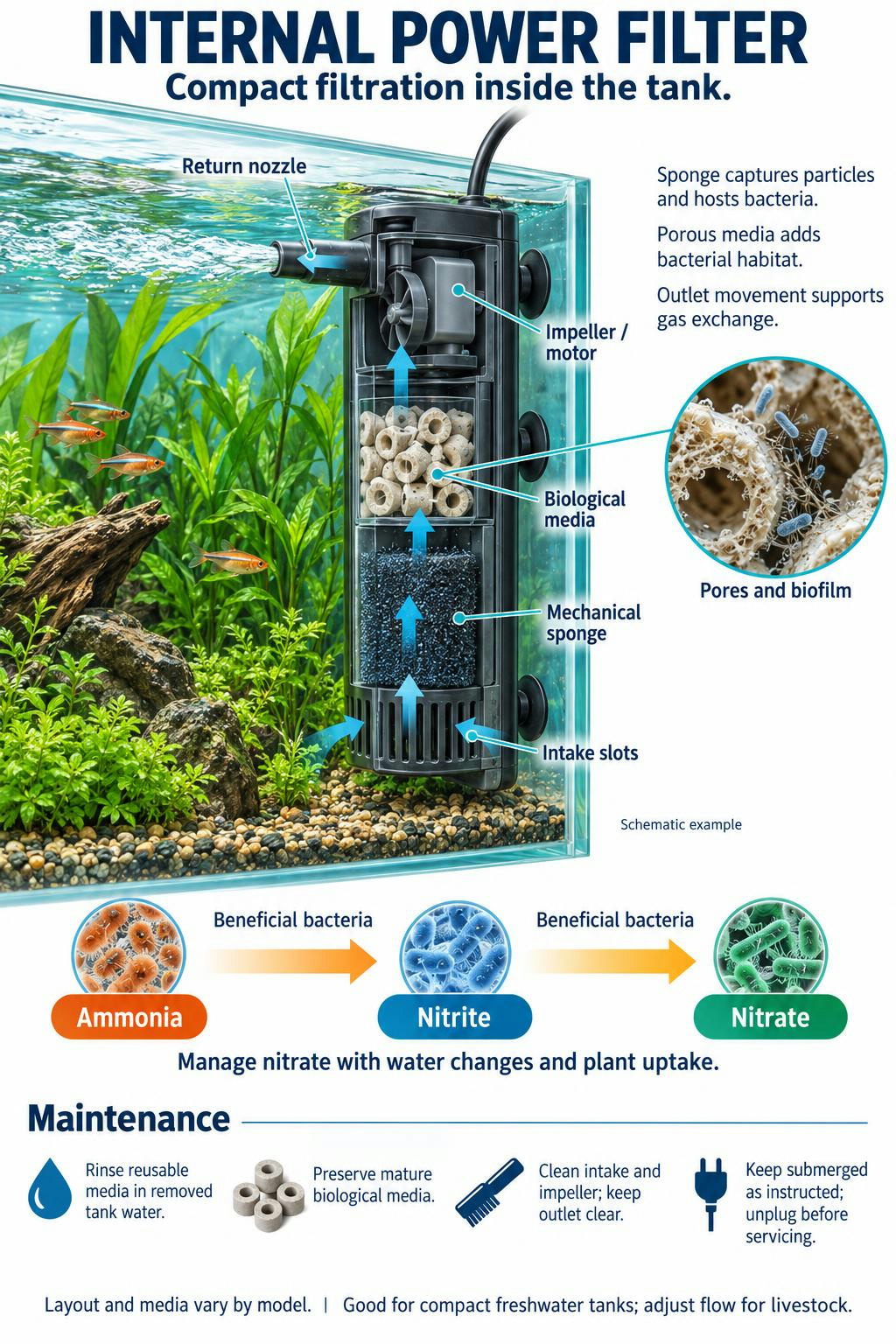
Best for compact tanks where the filter sits inside the aquarium and keeps equipment out of sight behind plants or hardscape.
 Click to enlarge
Best for compact tanks where the filter sits inside the aquarium and keeps equipment out of sight behind plants or hardscape.
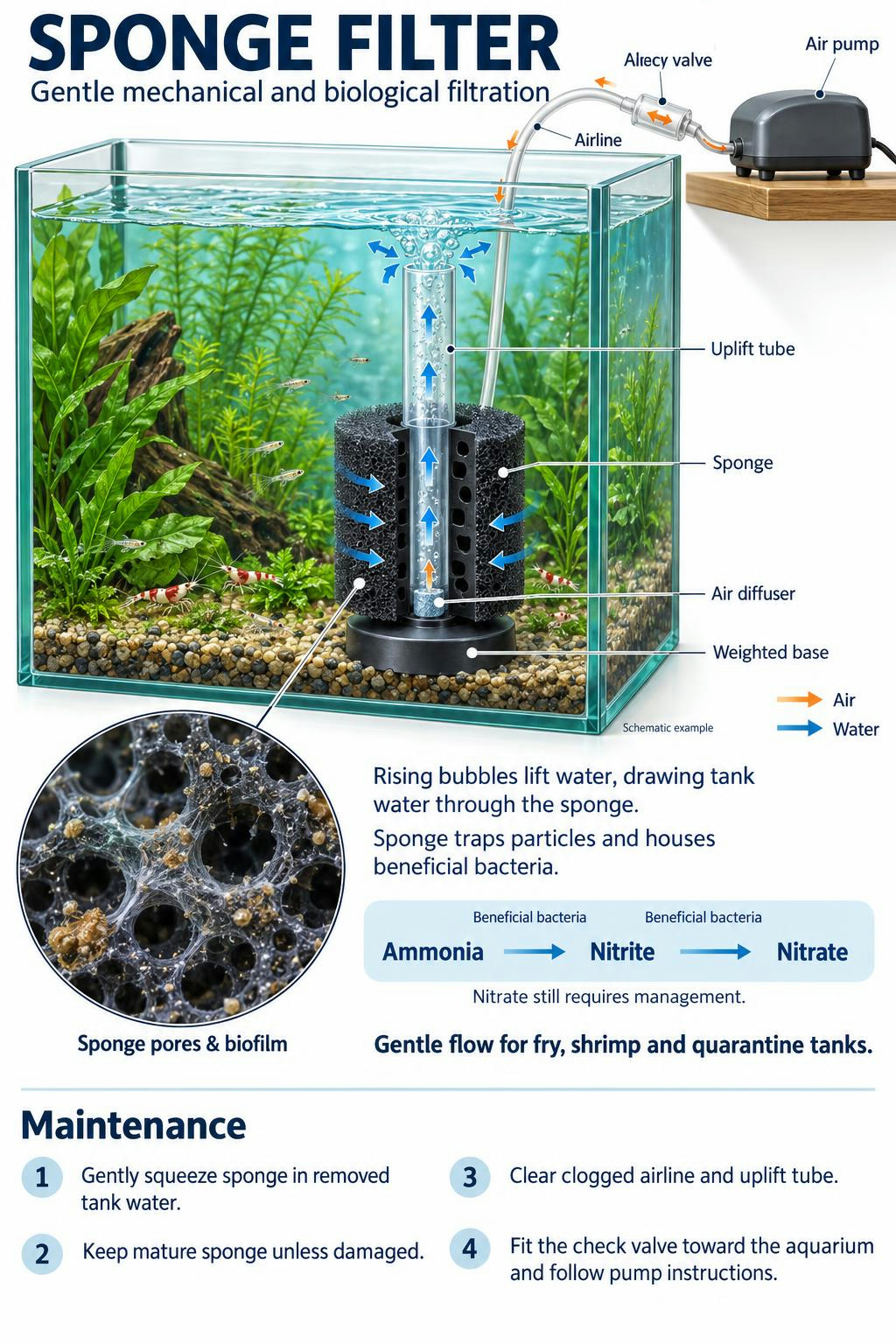
Best for low-flow tanks, fry, shrimp, quarantine systems, and simple biological filtration powered by an air pump.
 Click to enlarge
Best for low-flow tanks, fry, shrimp, quarantine systems, and simple biological filtration powered by an air pump.
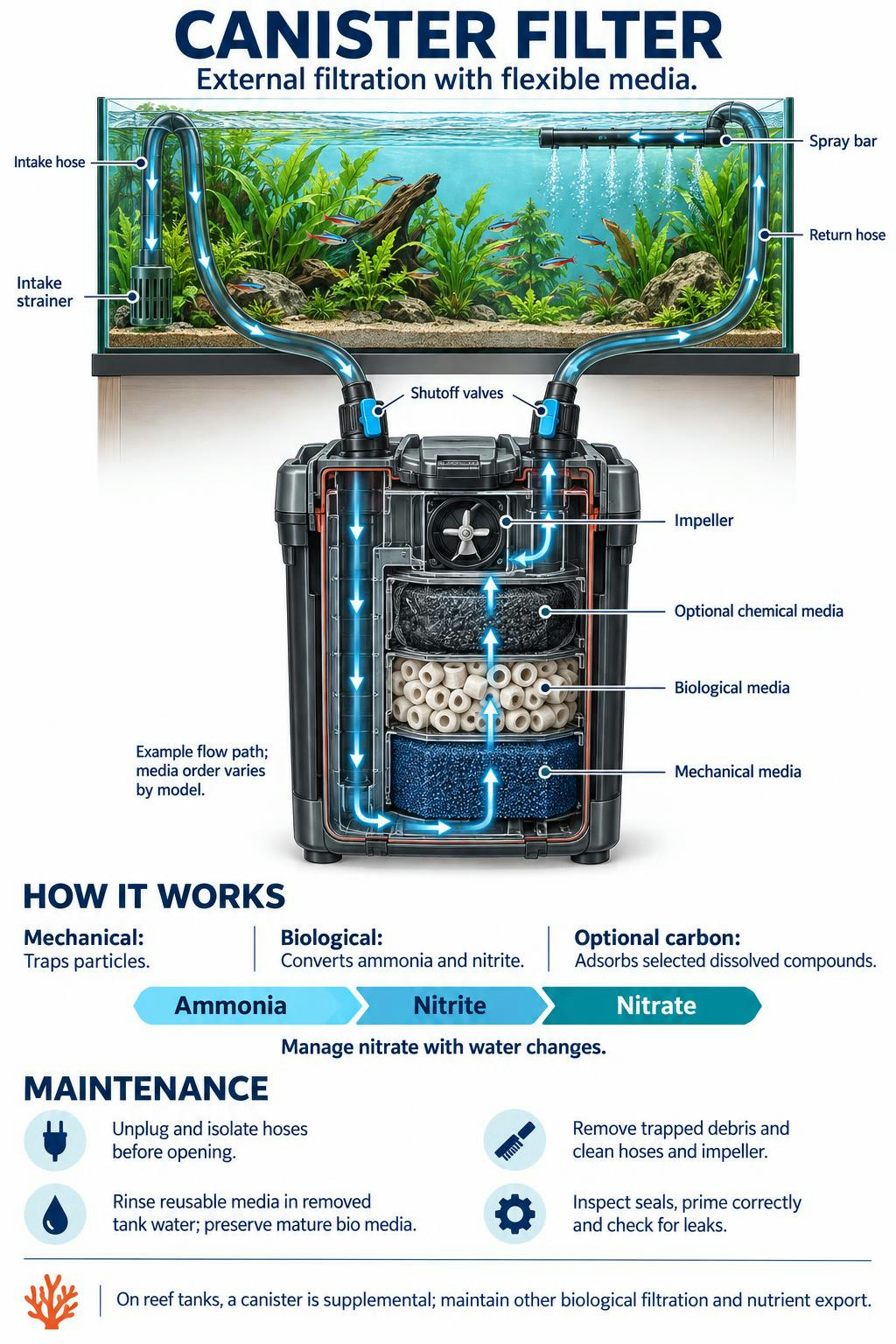
Best when you want to understand an external canister system: intake, media layers, return flow, and routine maintenance.
 Click to enlarge
Best when you want to understand an external canister system: intake, media layers, return flow, and routine maintenance.
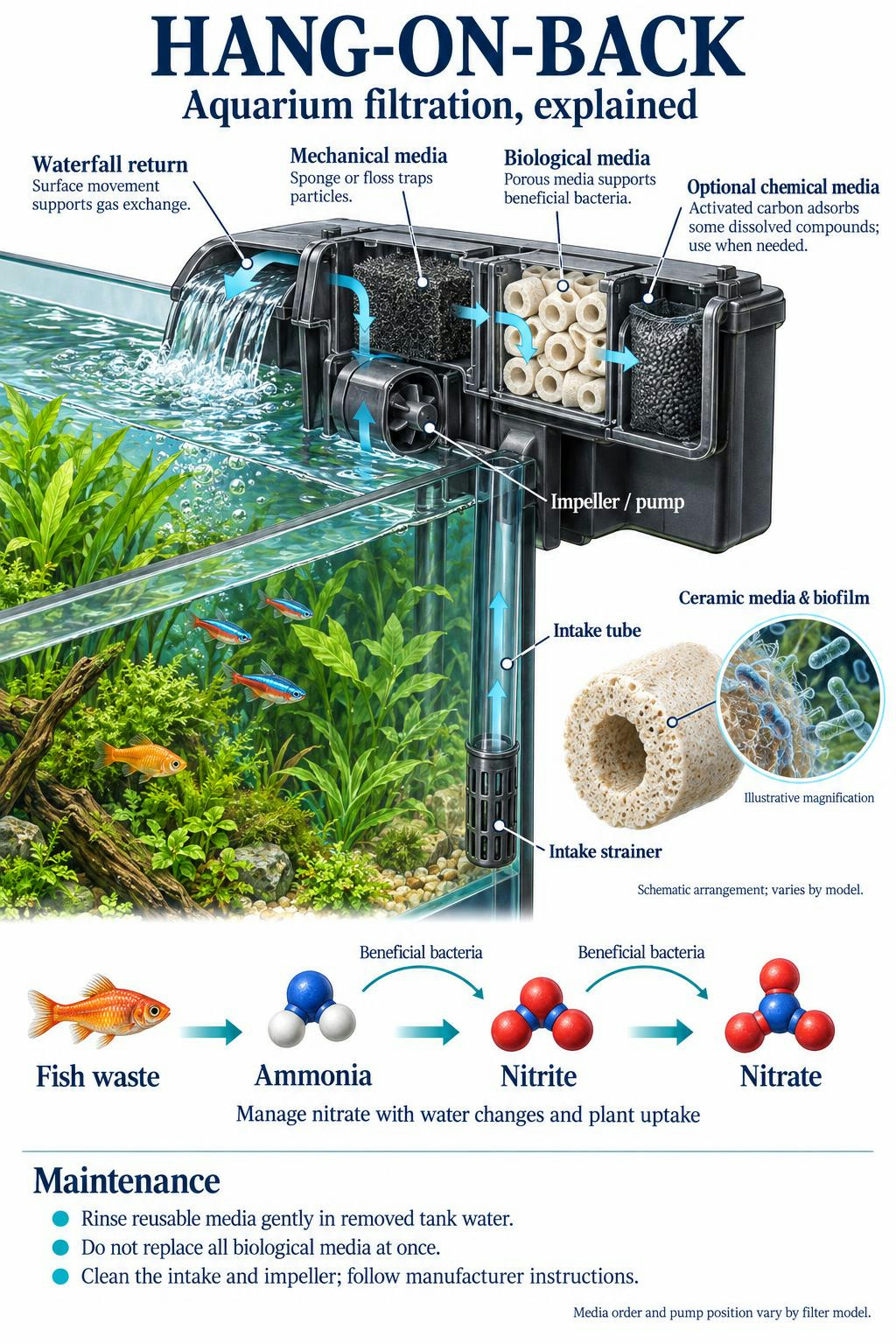
Best for small to medium freshwater tanks when you want simple setup, easy access, and visible waterfall return flow.
 Click to enlarge
Best for small to medium freshwater tanks when you want simple setup, easy access, and visible waterfall return flow.
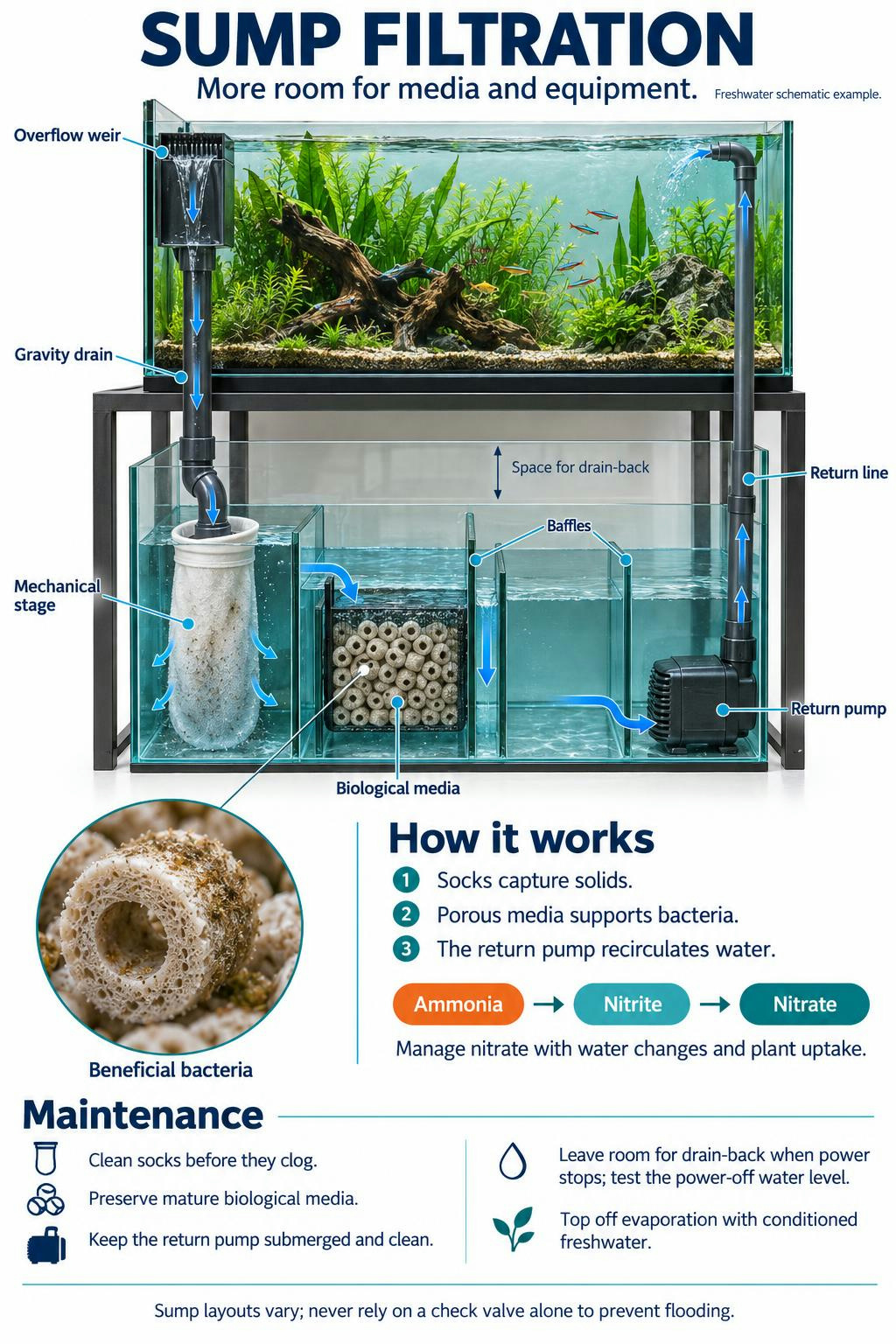
Best for larger freshwater planted tanks, high bioload displays, reef tanks, and systems that need room for pumps, media, and hidden equipment.
 Click to enlarge
Best for larger freshwater planted tanks, high bioload displays, reef tanks, and systems that need room for pumps, media, and hidden equipment.
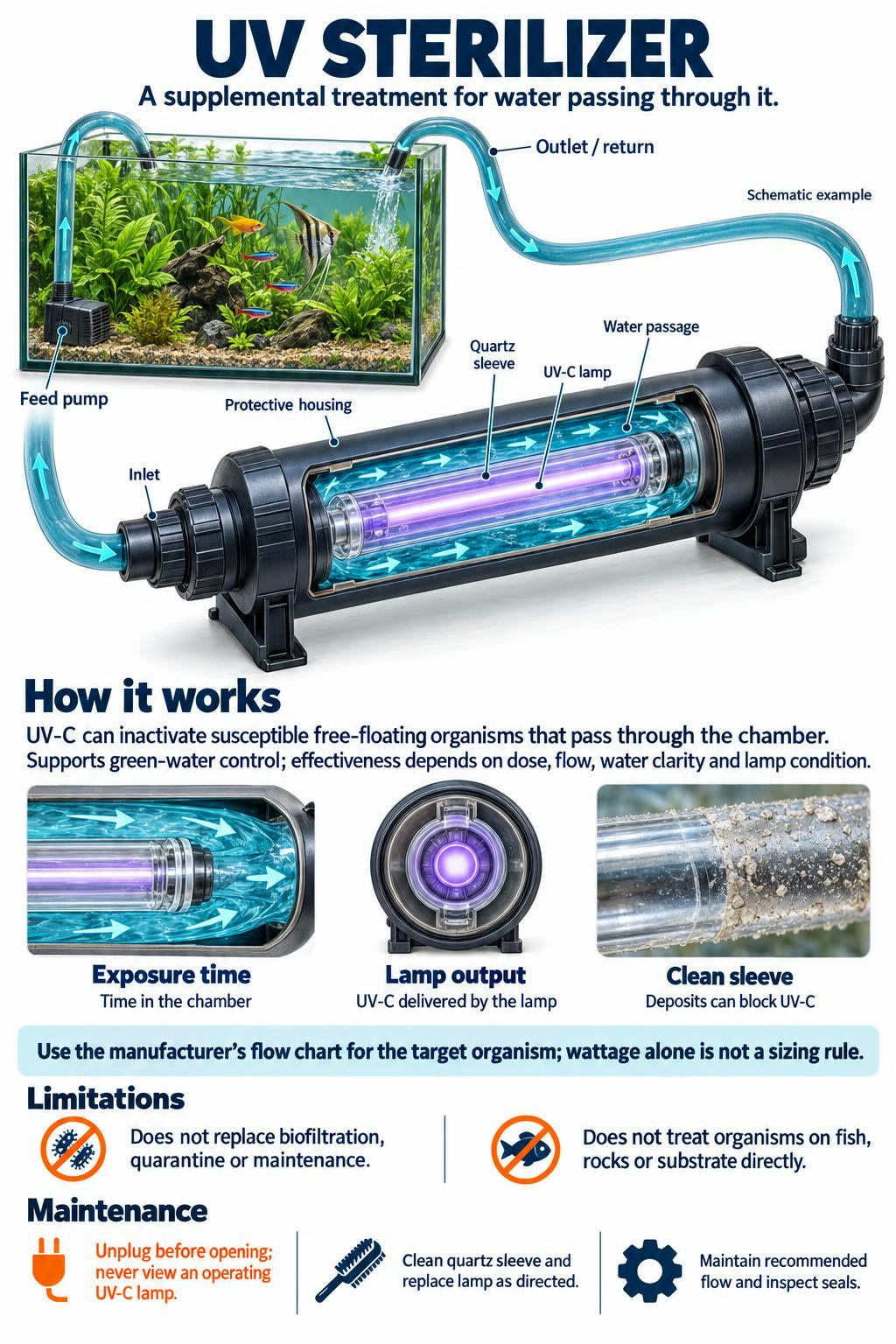
Best as a supplemental water-clarity and free-floating organism control tool for freshwater, saltwater, pond, and quarantine systems when matched to the right flow rate.
 Click to enlarge
Best as a supplemental water-clarity and free-floating organism control tool for freshwater, saltwater, pond, and quarantine systems when matched to the right flow rate.
Click a reef or saltwater system to compare live rock, sumps, reactors, skimmers, and compact all-in-one filtration.
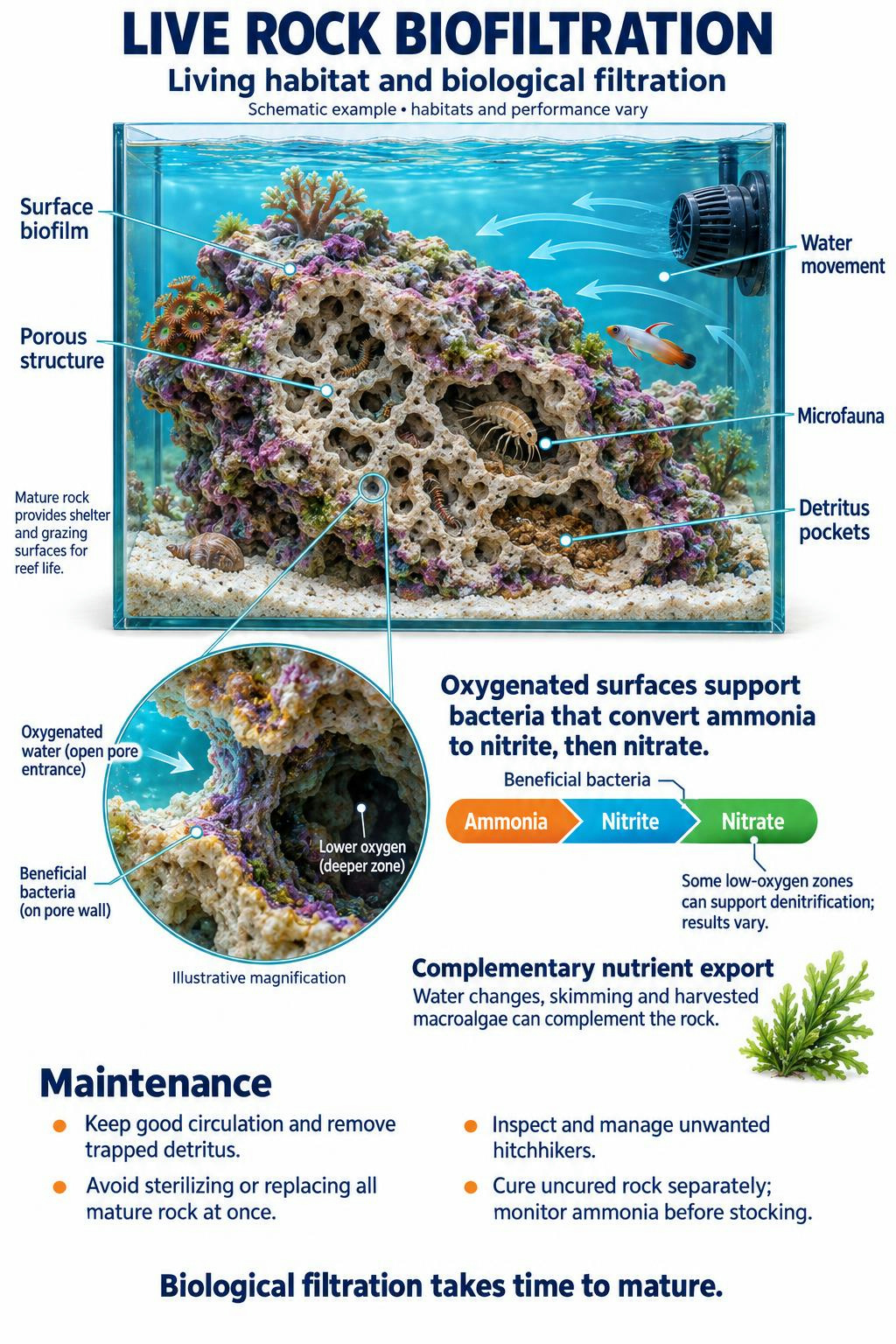
Best for reef aquariums where live rock is both habitat and a biological filter that supports bacteria, microfauna, and long-term stability.
 Click to enlarge
Best for reef aquariums where live rock is both habitat and a biological filter that supports bacteria, microfauna, and long-term stability.
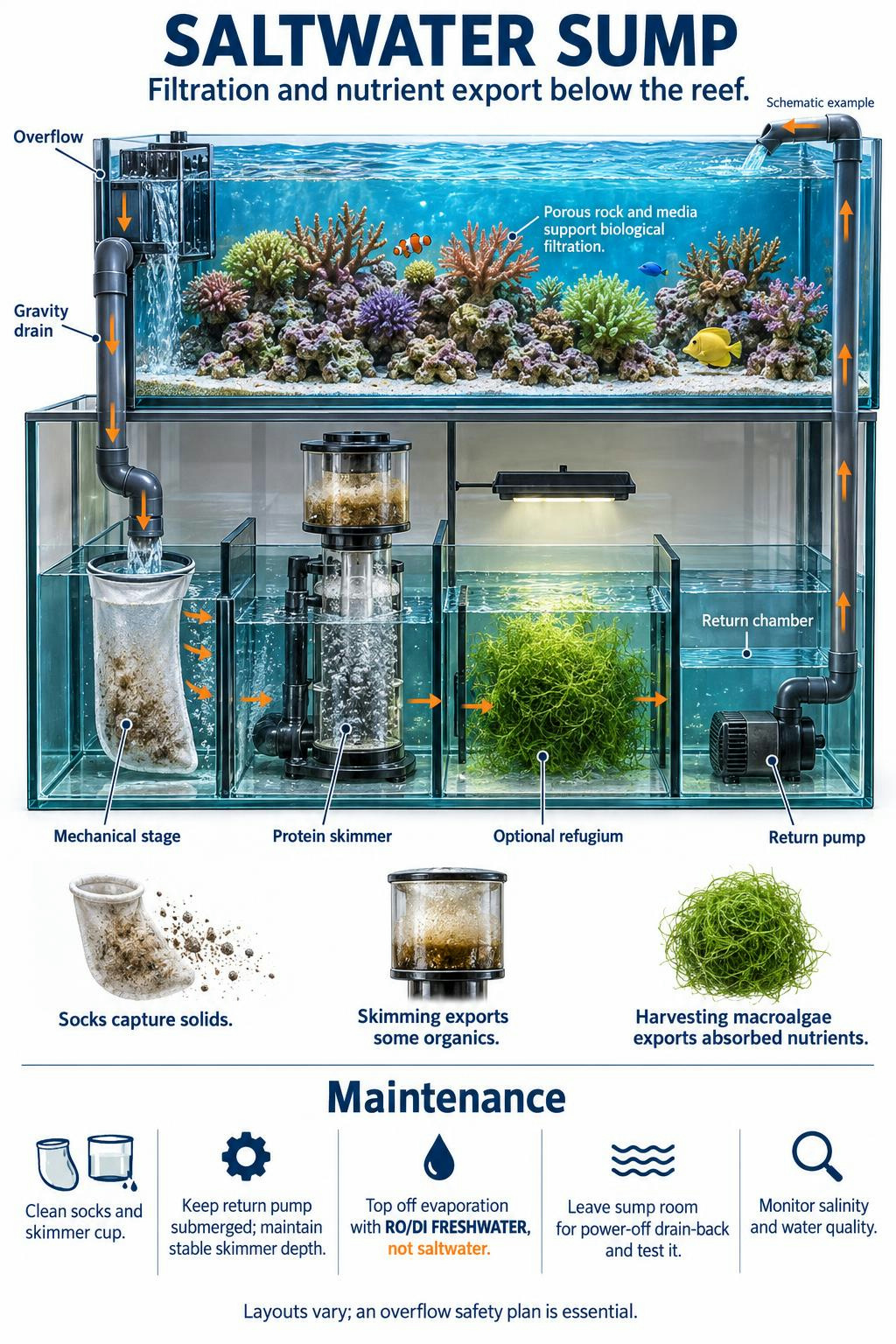
Best for reef-ready tanks that need more water volume, cleaner equipment placement, protein skimming, refugium space, and stronger nutrient export.
 Click to enlarge
Best for reef-ready tanks that need more water volume, cleaner equipment placement, protein skimming, refugium space, and stronger nutrient export.
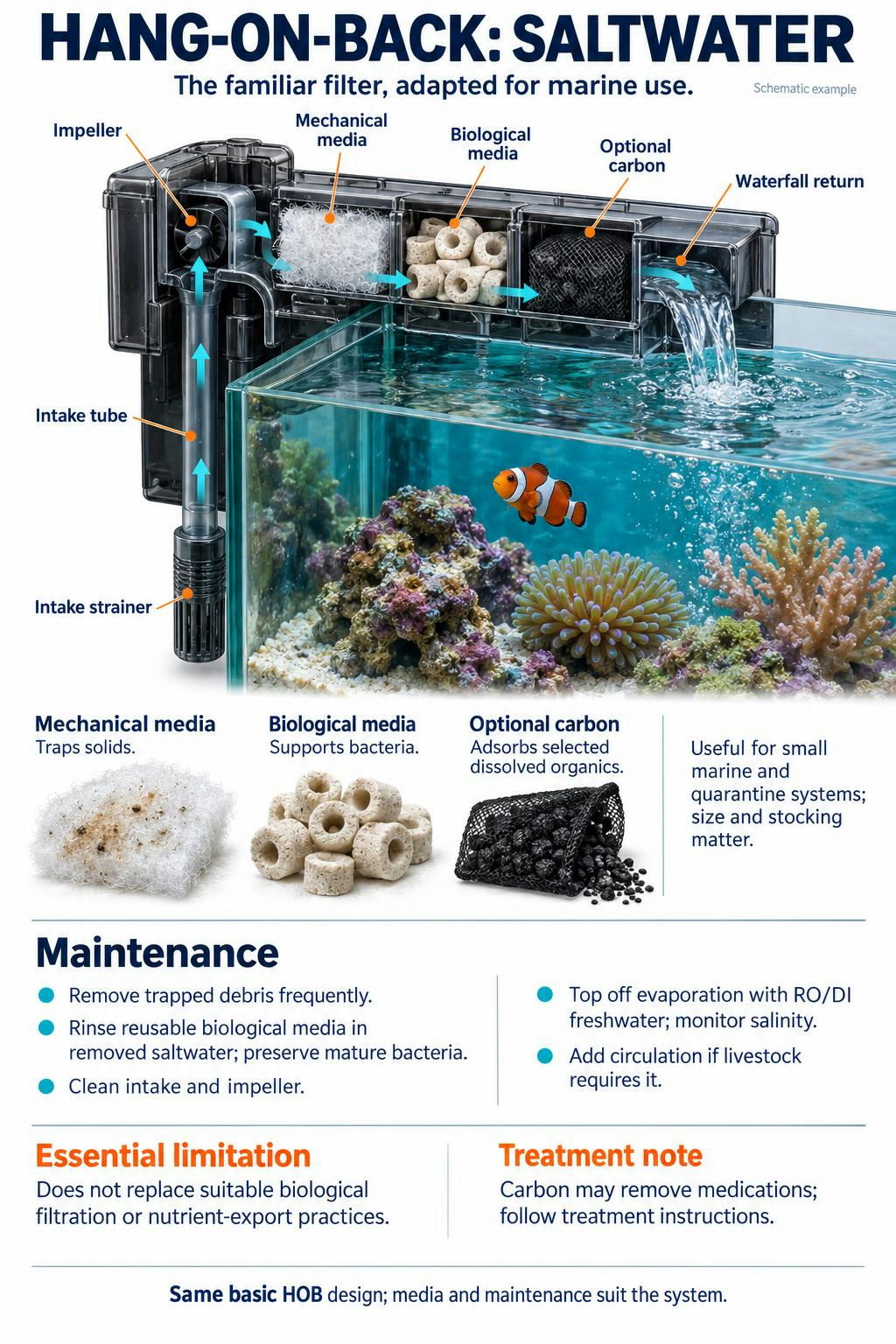
The filter body is not fundamentally different from a freshwater HOB. This guide shows how the same style of filter is used on small marine tanks, quarantine systems, nano reefs, hospital tanks, and fish-only saltwater aquariums.
 Click to enlarge
The filter body is not fundamentally different from a freshwater HOB. This guide shows how the same style of filter is used on small marine tanks, quarantine systems, nano reefs, hospital tanks, and fish-only saltwater aquariums.
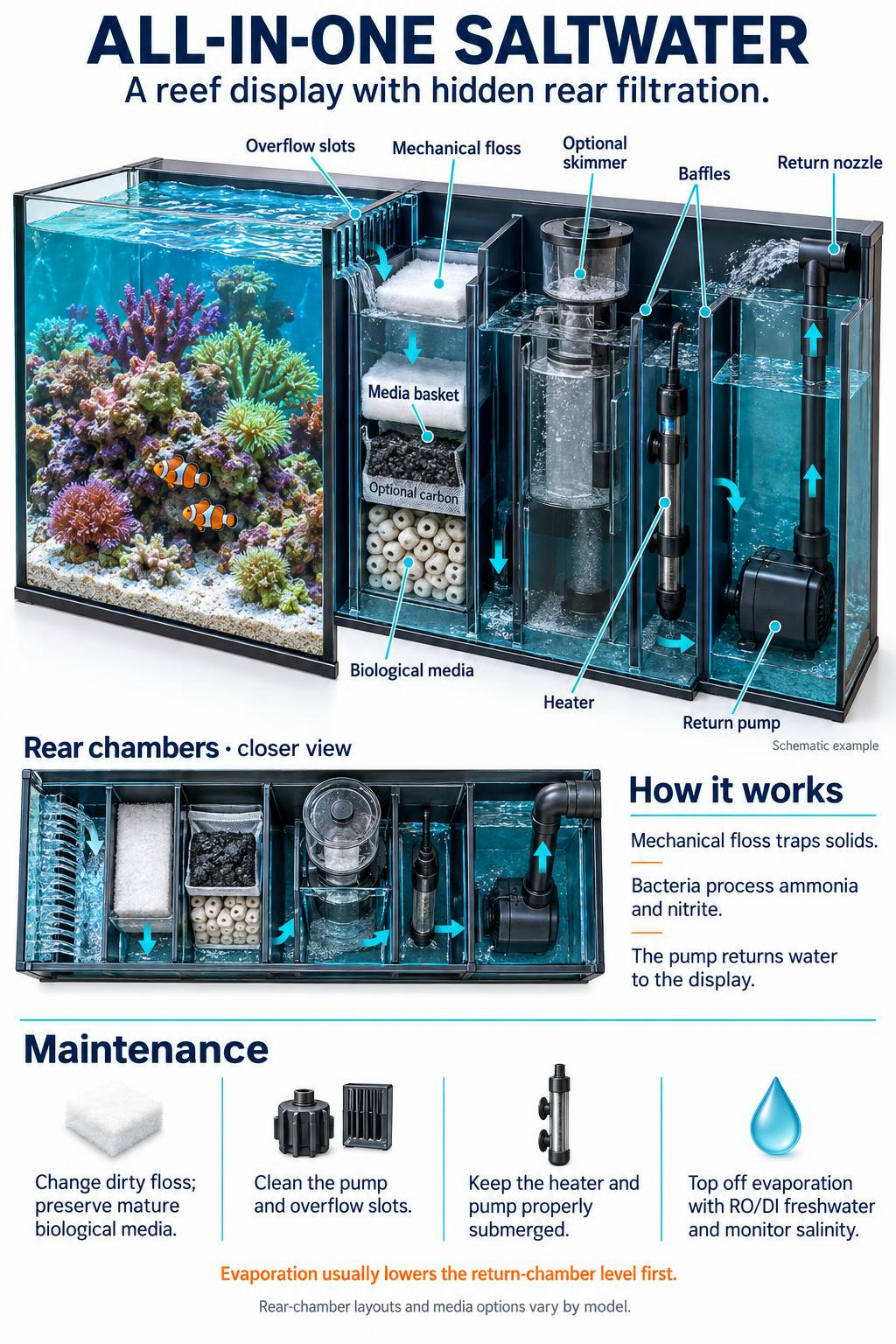
Best for nano and medium reef aquariums where the display and filtration chambers are combined into one compact footprint.
 Click to enlarge
Best for nano and medium reef aquariums where the display and filtration chambers are combined into one compact footprint.
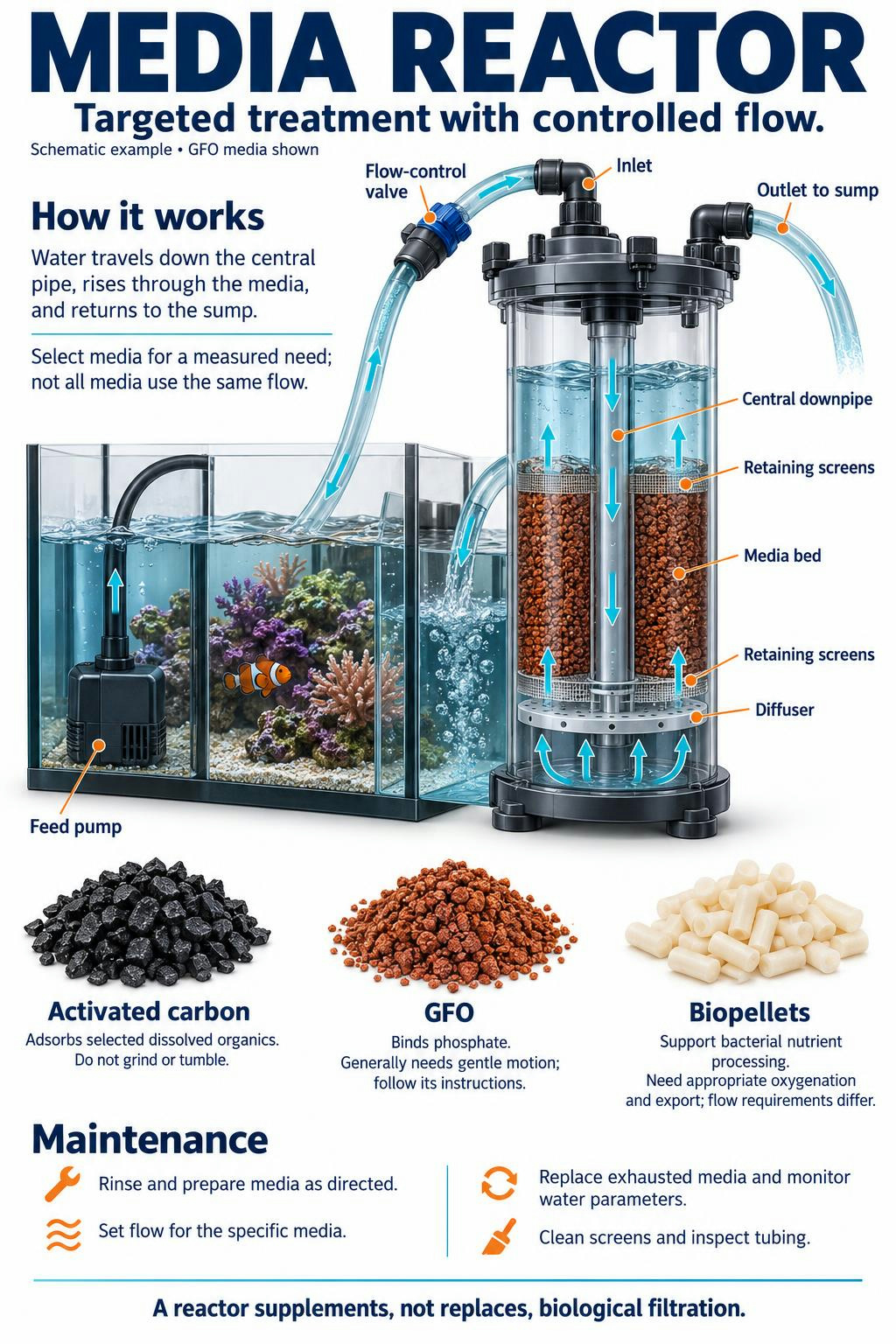
Best for reef and saltwater aquariums that need targeted phosphate, dissolved organics, or specialty media control with predictable flow.
 Click to enlarge
Best for reef and saltwater aquariums that need targeted phosphate, dissolved organics, or specialty media control with predictable flow.
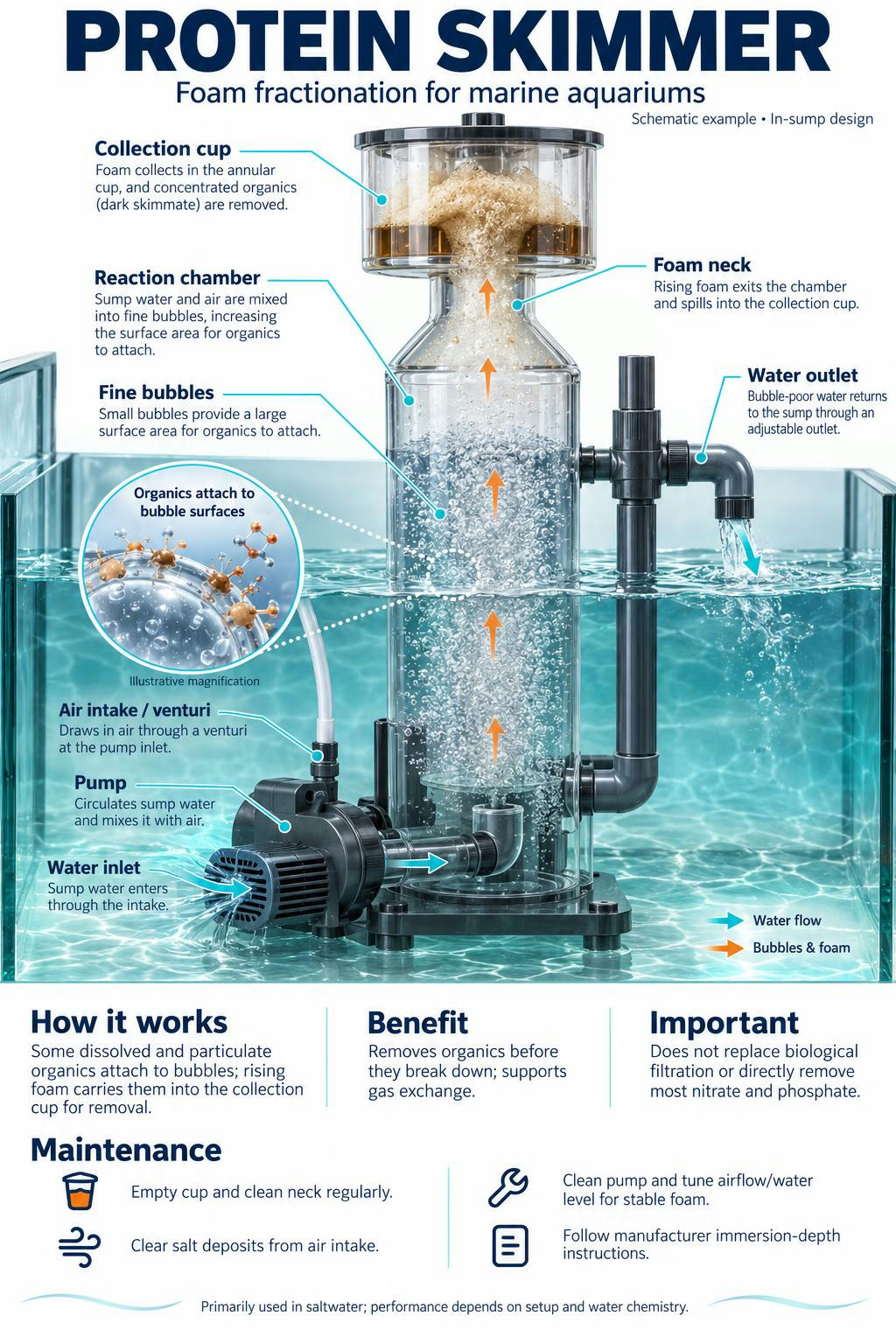
Best for reef tanks and saltwater aquariums where foam fractionation removes dissolved organics before they break down into nutrients.
 Click to enlarge
Best for reef tanks and saltwater aquariums where foam fractionation removes dissolved organics before they break down into nutrients.
Feeding guides, food types, and how to avoid common mistakes.
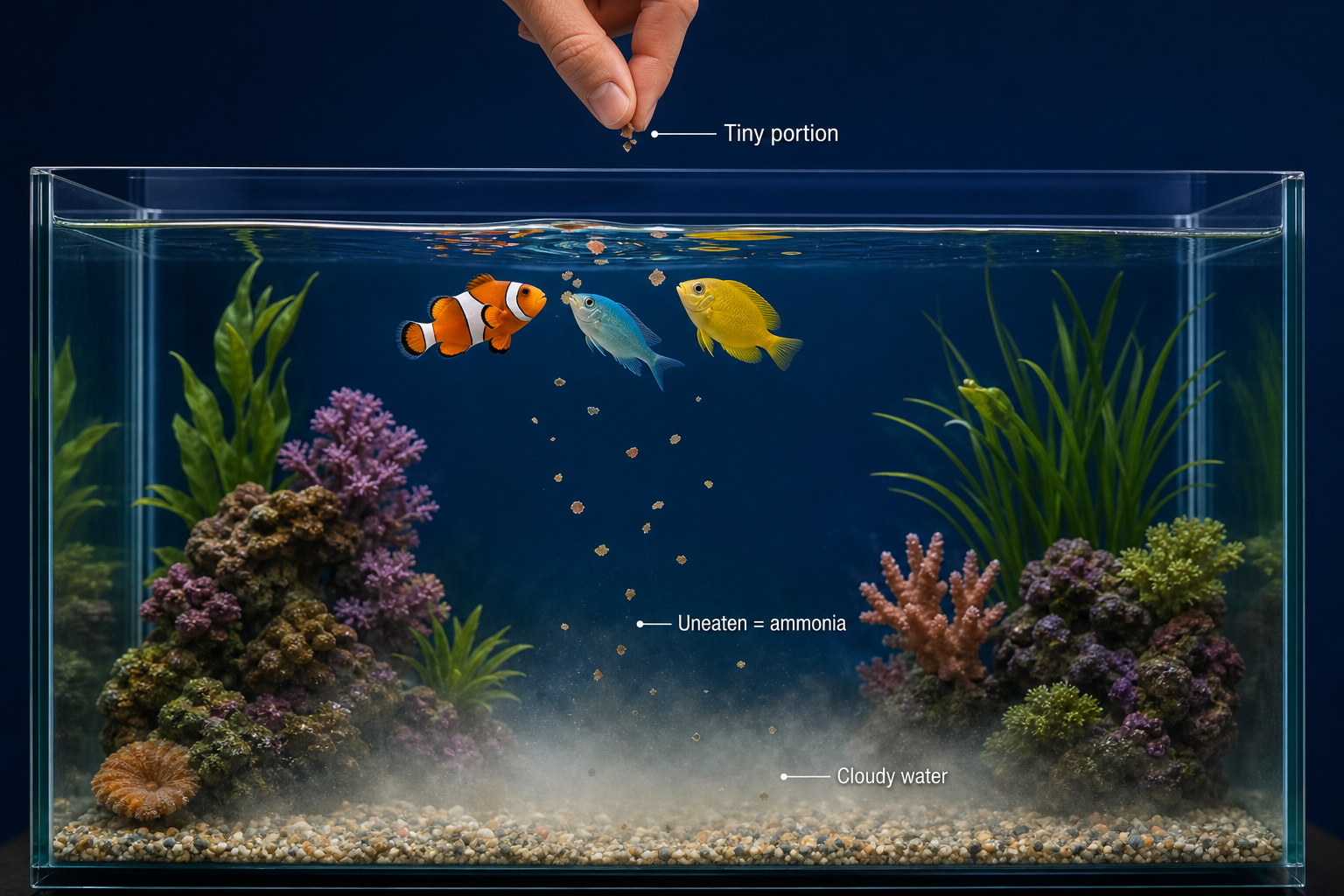 Daily feeding
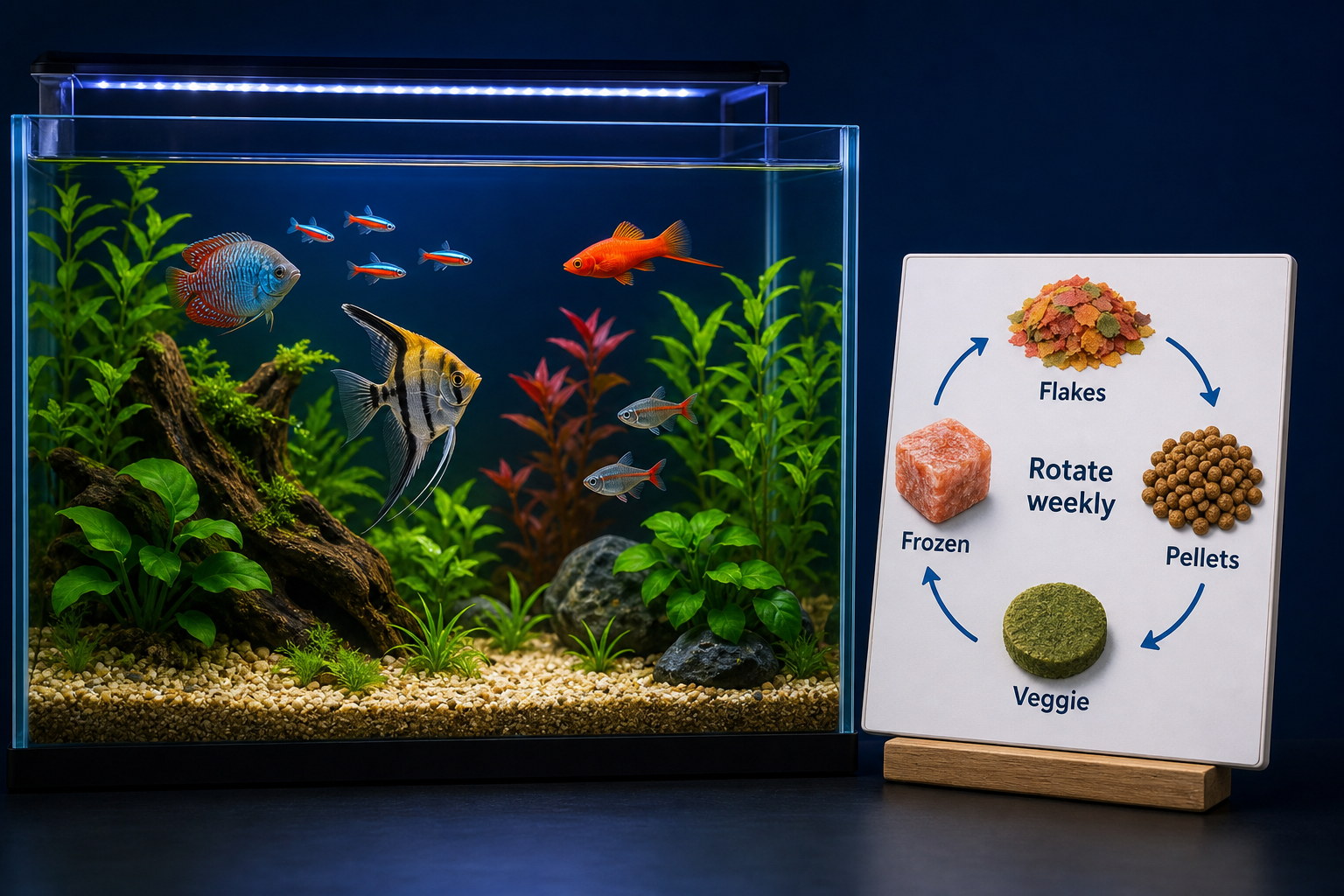 Variety
Water testing, parameters, algae, parasites, and building a stable tank.
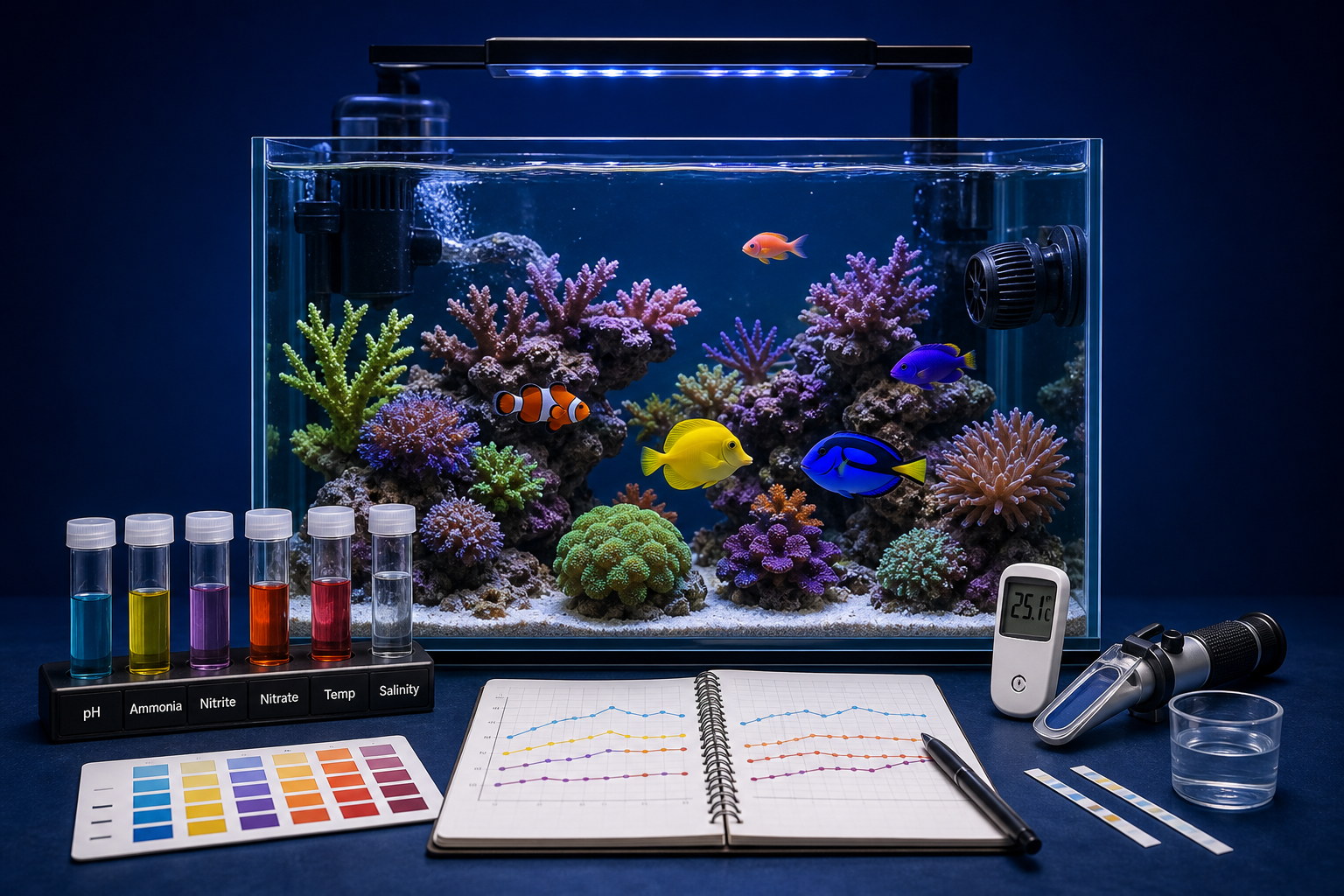 Testing rhythm
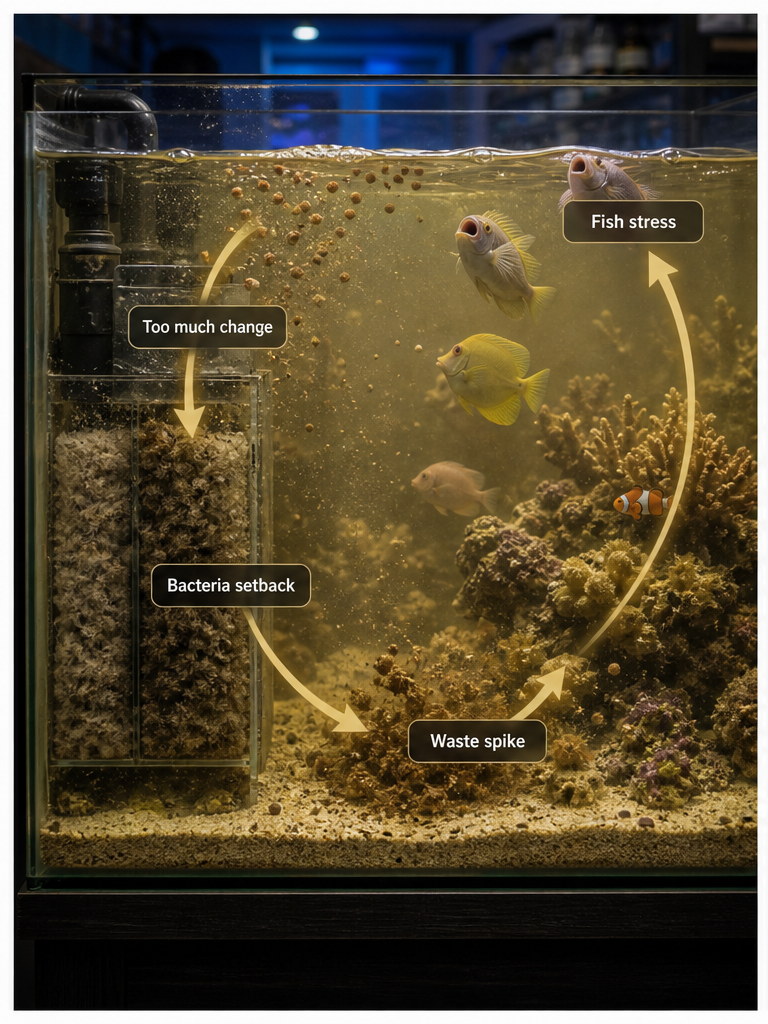 Stability
Diagnosis-style guides for the most common aquarium problems.
Separate new-tank bacterial bloom, overfeeding, dirty substrate, filter problems, and green-water algae.
Open guideCheck light duration, nutrients, phosphate, maintenance habits, plant competition, and cleanup crew fit.
Open guideSpot symptoms like white dots, flashing, clamped fins, rapid breathing, fin damage, and appetite loss.
Open guideTest immediately, protect livestock, reduce feeding, check filtration, and avoid replacing all media at once.
Open guidePrioritize oxygen, temperature, ammonia, nitrite, flow, surface agitation, and recent chemical additions.
Open guideReview salinity, alkalinity, nitrate, phosphate, lighting changes, flow, pests, and recent dips or moves.
Open guideCheck light, direct sun, nutrients, filtration, water changes, and whether a UV sterilizer fits the system.
Open guideLook at copper, ammonia, nitrite, parameter swings, acclimation, medication exposure, and missing minerals.
Open guideFind hidden decay, clogged filters, dirty substrate, stagnant areas, dead livestock, and overfeeding before adding chemicals.
Open guideSlimy red or blue-green mats on sand and rock? Siphon them out, then fix the flow, feeding and light that feed cyano.
Open guideRagged fins? Tell fin rot from nipping or snags, fix the water first, and medicate only if the damage keeps spreading.
Open guideSteady beats perfect. Find out whether low KH, CO2 or reef alkalinity dosing is making your pH swing, and fix it slowly.
Open guideBring a fresh water sample, tank size, livestock list, recent test results, and clear photos of the tank or affected fish. That gives the store a much better starting point than guessing from one symptom.